How to Fix AC Compressor Repair in 5 Easy-to-Follow Steps

Start AC Compressor Repair With the Right Diagnosis
Do not replace the compressor until the system is tested. Warm air, clicking, weak cooling at idle, or unusual noise can come from a failed capacitor, clutch, fuse, wiring issue, refrigerant leak, or the compressor itself.
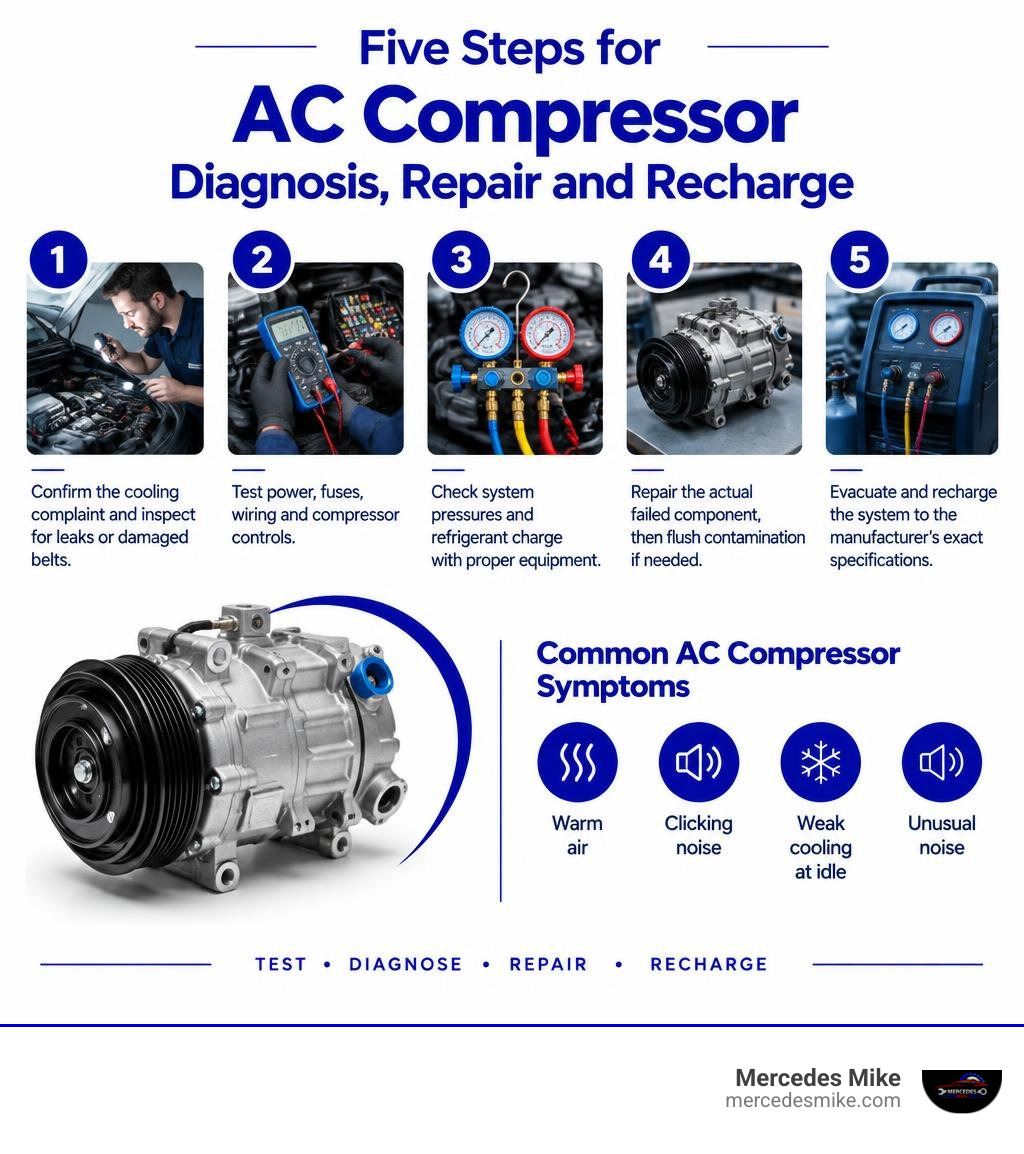
For safe, effective AC compressor repair, follow these five basics:
Confirm the cooling complaint and inspect for leaks or damaged belts.
Test power, fuses, wiring, and compressor controls.
Check system pressures and refrigerant charge with proper equipment.
Repair the actual failed component, then flush contamination if the compressor failed internally.
Evacuate and recharge the system to the manufacturer's exact specifications.
A compressor is a sealed, high-pressure component. Refrigerant recovery and recharging require certified equipment, and modern Mercedes and BMW systems may use electronically controlled or variable-displacement compressors. Getting the diagnosis right can turn a costly replacement into a smaller electrical or leak repair.
I'm Mike Ibrahim, and the next sections explain how to spot the real cause before approving a compressor repair.
Understanding How an AC Compressor Works and Common Failure Symptoms
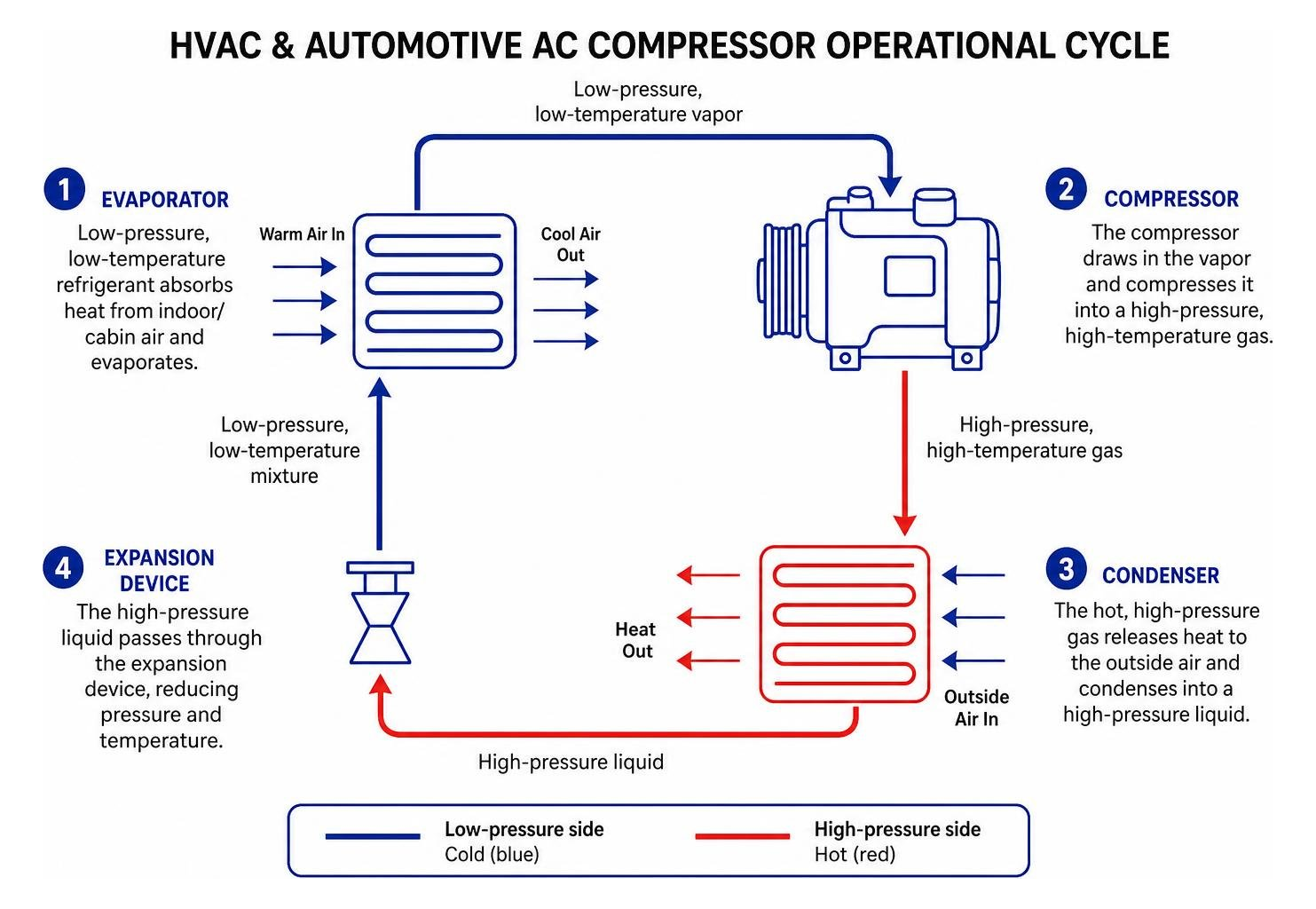
The compressor serves as the beating heart of your vehicle's climate control system. When maintaining cabin comfort across South Florida heat, its primary mechanical duty remains drawing in low-pressure, low-temperature refrigerant vapor and compressing it into a high-pressure, high-temperature gas. This intense pressurization allows heat absorbed from the vehicle interior to be shed efficiently through the condenser coils in front of your vehicle's radiator.
When this mechanical pump begins to struggle, the symptoms are immediate and noticeable:
Warm or Tepid Airflow: The vents blow ambient or lukewarm air because the system cannot maintain the pressure differential necessary for heat exchange.
Grinding and Screeching Noises: Failing internal bearings, damaged swash plates, or worn clutch assemblies emit harsh metallic sounds whenever cooling is engaged.
Electrical Circuit Tripping: A struggling motor draws excessive amperage, frequently popping circuit breakers or blowing dedicated fuses.
Clutch Slippage: On traditional automotive compressors, the electro-magnetic clutch may fail to engage or will slip intermittently, producing burning odors and visible friction wear.
Oil Stains and Visible Moisture: Refrigerant circulates alongside specialized lubricating oil such as PAG or POE oil. If you spot greasy residue around compressor body seams or line fittings, you likely need a prompt refrigerant leak repair before the pump runs completely dry and seizes.
Modern luxury vehicles often utilize clutchless, variable-displacement compressors. Instead of cycling on and off with an audible click, these advanced units alter their internal piston stroke using an electronic control valve. When they fail, you might notice weak cooling at idle that improves slightly during highway cruising—a distinct sign of poor displacement control under heavy thermal load.
Critical Warning Signs of Impending Mechanical Failure
Catching compressor issues early prevents complete system contamination. Mechanical failure rarely happens overnight; it offers clear warning signs:
Hard Starting: The compressor motor struggles against internal resistance to start rotating, often causing the vehicle's engine RPM to dip noticeably upon engagement.
Intermittent Cooling: Cabin temperatures fluctuate unpredictably, blowing cold for ten minutes before reverting to sticky, humid air.
Seized Drive Pulley: In vehicles, a locked compressor bearing causes the serpentine belt to drag across a motionless pulley, resulting in violent squealing, belt shredding, and immediate loss of power steering or alternator charging.
External vs Internal Compressor Malfunctions
Before assuming the compressor itself is dead, we must distinguish between external control failures and catastrophic internal damage:
External Malfunctions (Often Inexpensive to Fix): Blown fuses, damaged relays, faulty wiring harnesses, or failed electronic control solenoids can cut power to a perfectly healthy compressor. Many reported cooling failures stem from simple electrical faults rather than dead motors.
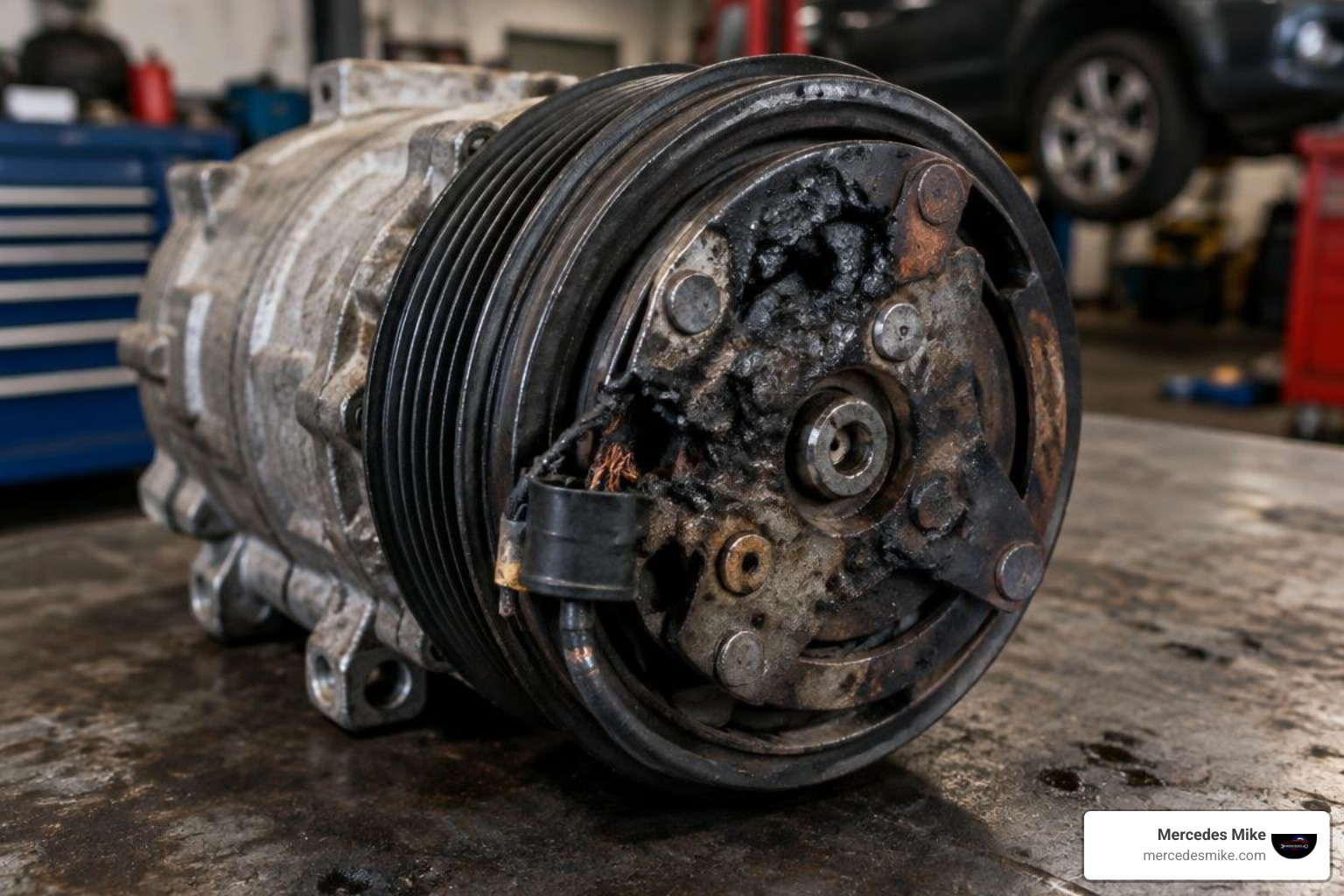
Internal Malfunctions (Require Full Replacement): Piston scoring, broken reed valves, connecting rod snaps, and bearing disintegration are catastrophic. If metal shavings disperse throughout the refrigerant lines, you will need a comprehensive system flush and likely an AC condenser repair to prevent the new unit from ingesting old debris.
5 Essential Steps for AC Compressor Repair and Troubleshooting
Troubleshooting an AC compressor requires a methodical approach, specialized tools, and strict adherence to environmental regulations. Before attempting any teardown, gather the necessary diagnostic gear:
Digital multimeter with resistance, voltage, and continuity testing
Manifold gauge set compatible with R-134a or R-1234yf
Electronic refrigerant leak detector or UV dye kit
EPA-certified recovery machine and DOT recovery cylinder
Dual-stage vacuum pump and micron gauge
Torque wrenches and manufacturer-specific line disconnect tools
Step 1 & 2: Diagnostic Checks Before an AC Compressor Repair
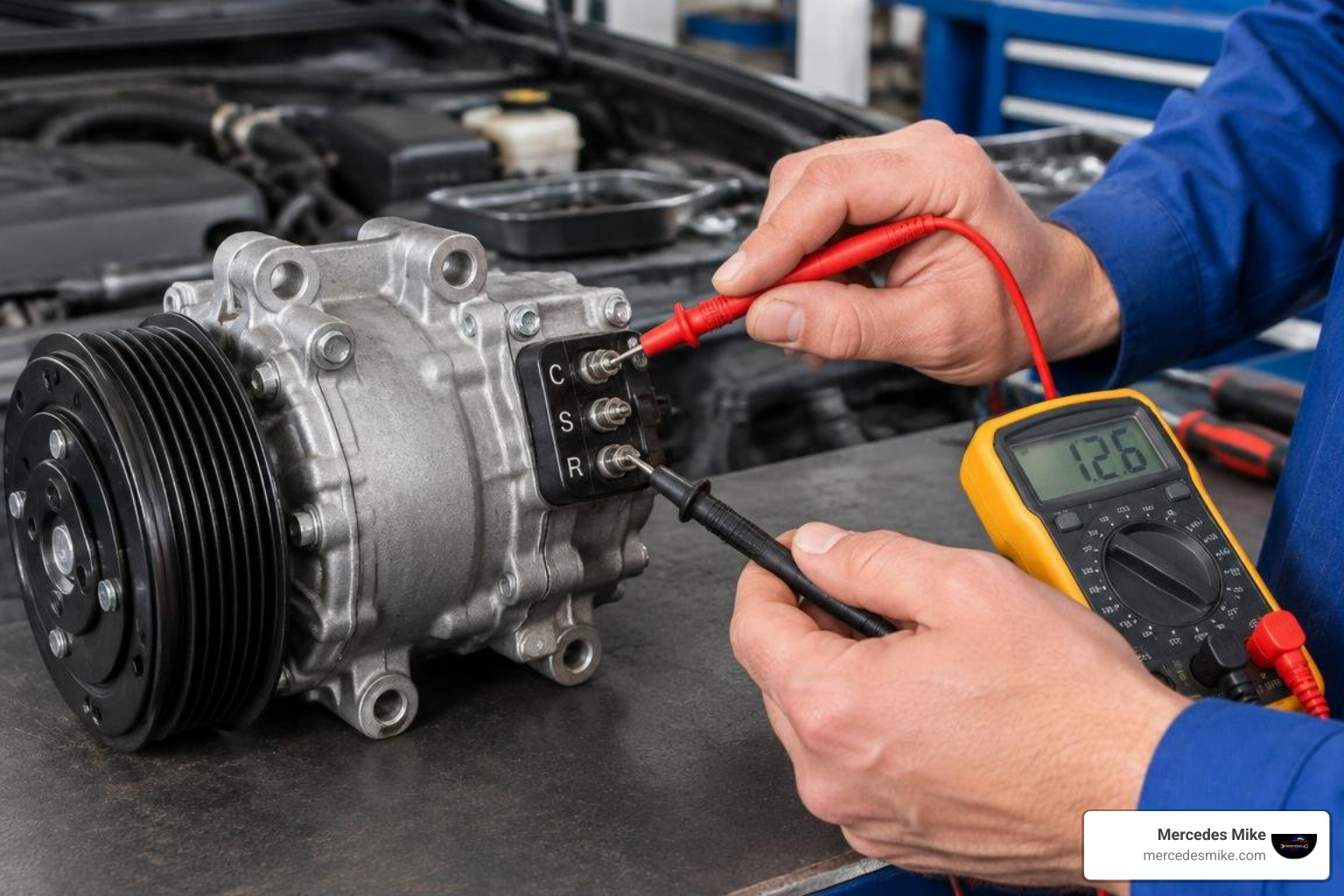
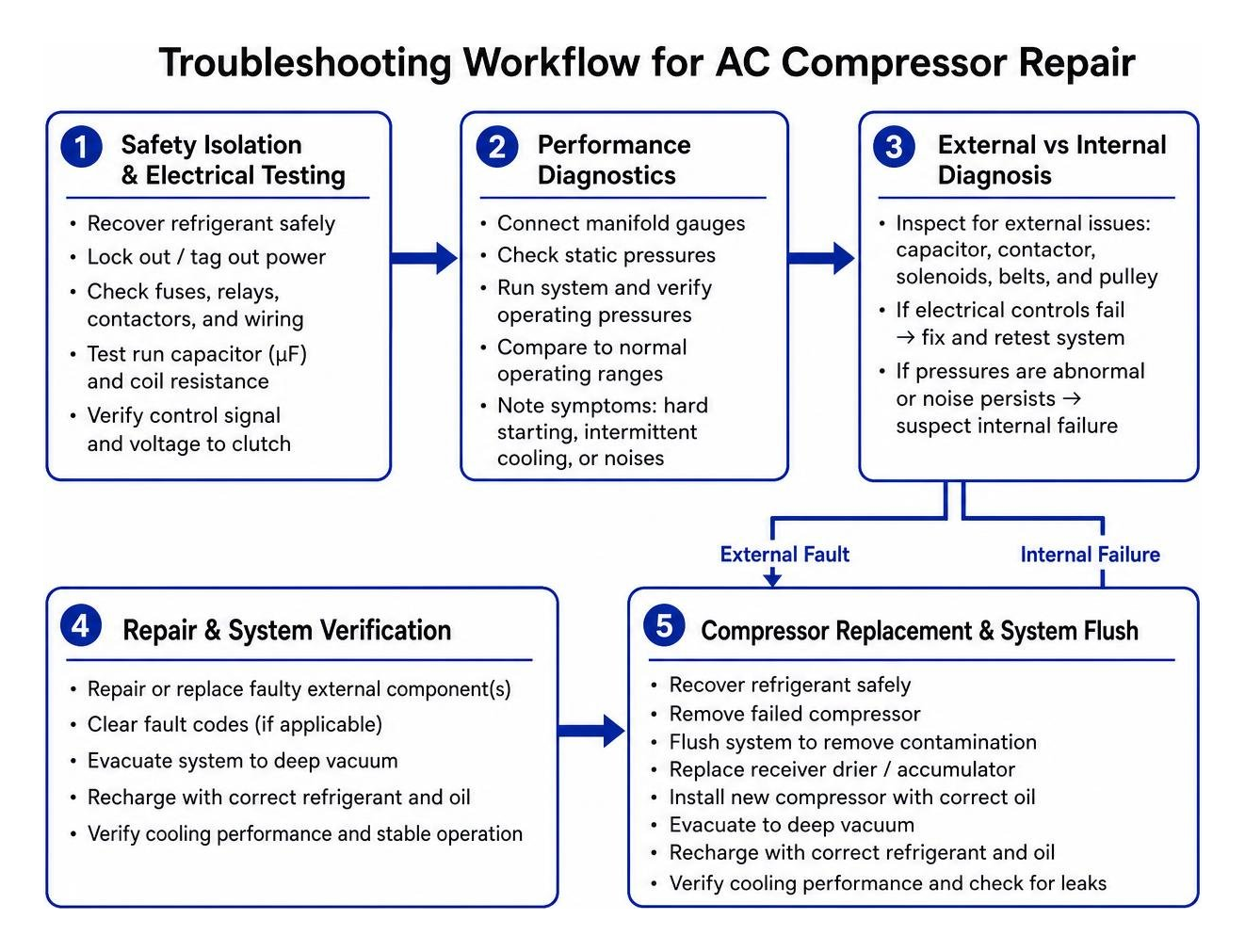
Step 1: Safety Isolation and Electrical Testing
Always disconnect the vehicle's battery before inspecting wiring.
Test Fuses, Relays, and Clutch Solenoids: Inspect dedicated climate control fuses and test the compressor clutch relay or electronic control solenoid using a digital multimeter. Ensure full operating voltage and proper ground reach the compressor harness connector when AC is commanded on.
Check Coil and Terminal Resistance: Measure resistance across the electromagnetic clutch coil or electronic control valve solenoid. Standard clutch coils typically read 3 to 5 ohms. On high-voltage hybrid or electric scroll compressors, verify balanced three-phase winding resistance values. If any reading displays zero (short circuit) or infinite resistance (open winding), the component is electrically dead. Check for continuity between each terminal pin and the bare metal casing to confirm there is no internal ground fault. If electrical testing shows complex control faults, booking professional AC repair ensures pinpoint accuracy.
Step 2: System Pressure and Leak Diagnostics
Connect your manifold gauges to the high- and low-side service ports to evaluate static and operating pressures. Static pressures that fall below manufacturer benchmarks indicate a loss of refrigerant charge, triggering low-pressure safety cutoffs that prevent the compressor from engaging. Look for oily dirt buildup around line joints and utilize an electronic sniffer to isolate leaks.
Step 3, 4 & 5: System Flushing, Component Replacement, and Proper Recharging
Step 3: Refrigerant Recovery and System Flushing
Never vent refrigerant into the atmosphere; federal EPA regulations mandate capturing all gas using dedicated recovery machinery. If the old compressor suffered internal mechanical failure, often called a black death burnout, you must flush the lines, replace the condenser if its microchannel design prevents flushing, and swap out the thermal expansion valve or orifice tube to clear metallic sludge.
Step 4: Component Installation and Torque Specifications
When installing the replacement compressor, replace every single rubber O-ring with fresh, refrigerant-compatible seals lubricated with the proper PAG or POE oil. Secure all mounting hardware to exact manufacturer specs—for instance, typical high- and low-pressure fitting nuts demand precise torquing to avoid crushing seals or inducing structural stress, matching modern OEM torque and removal procedures. Always install a brand-new receiver-drier or accumulator filter to capture residual system moisture.
Step 5: Deep Vacuum Evacuation and Precision Recharging
Connect a dual-stage vacuum pump and pull the system down below 500 microns. Hold the vacuum for at least 15 to 30 minutes to confirm the absence of leaks and boil off internal moisture. Once verified, perform an air conditioning recharge by weighing in the exact refrigerant amount specified on the under-hood placard.
Cost Breakdown: Evaluating Repair Expenses vs Full Replacement
Understanding the financial side of climate control maintenance prevents expensive surprises. Pricing varies depending on vehicle make, compressor design, and whether you are servicing a conventional or luxury automotive climate setup.
Service / Component Type | Average Parts Cost | Typical Labor Range | Total Expected Cost (2026 Prices) |
|---|---|---|---|
Automotive A/C Compressor (DIY Parts Only) | $250 – $450 | $0 (DIY) | $350 – $650 (incl. flush/gas) |
Automotive Compressor Replacement (Pro Shop) | $350 – $800 | $400 – $700 | $750 – $1,500 |
Luxury Automotive Compressor (Dealer/Specialist) | $600 – $1,400 | $600 – $1,100 | $1,200 – $2,500 |
Labor rates across South Florida generally range between $100 and $200 per hour, with luxury automotive compressor replacements requiring specialized diagnostic time and factory-grade equipment.
When to Replace vs Pursue an AC Compressor Repair
Deciding whether to replace just the faulty component, install a new compressor, or swap out the entire cooling setup comes down to straightforward math:
The 50% Rule: If the quote for repairing an aging compressor exceeds 50% of the cost of a complete replacement unit, invest in the new system.
System Age: Most automotive compressors are engineered to last 10 to 15 years or 150,000 to 200,000 miles. If your vehicle is nearing that range, putting a new compressor into an aged climate system with weathered lines and seals is rarely cost-effective.
Refrigerant Type: Modern vehicles using R-134a or newer R-1234yf require precise charging equipment, specialized recovery tools, and refrigerant-specific lubricants.
Contamination Severity: If a mechanical breakdown filled the circuit with fine metal debris, review comprehensive HVAC compressor service guidelines to evaluate whether replacing the full package avoids recurring breakdowns down the road.
Automotive Climate Control Specifics for Luxury Vehicles
Precision European engineering requires specialized attention. Driving a Mercedes-Benz, BMW, Audi, or Porsche through warm coastal climates puts unique demands on climate control systems:
Variable-Displacement Control Valves: Modern European platforms use pulse-width modulated internal solenoids rather than magnetic clutches. Diagnosing these requires advanced scan tools to read real-time evaporator temperature curves and compressor load percentages.
Serpentine Belt Alignment: If an automotive compressor bearing develops play, it destabilizes the accessory belt drive, endangering the water pump and alternator.
High-Voltage EV/Hybrid Compressors: Hybrid and electric powertrains employ scroll compressors powered by 400V+ battery packs. Servicing these requires Class-0 insulated safety gear and non-conductive POE dielectric oils; using standard automotive PAG oil will trigger high-voltage isolation faults and shut down the vehicle.
Precision Recharging: Luxury climate systems have tight refrigerant tolerances, often within ±15 grams. Ensuring optimal cabin comfort requires a dedicated German auto AC recharge performed with computerized recovery stations, which is a standard part of comprehensive Mercedes air conditioning service.
Frequently Asked Questions about AC Compressor Troubleshooting
Can an AC compressor be repaired without replacing the entire unit?
Yes. If the issue is external—such as a defective relay, blown fuse, bad wiring harness, electronic control valve, or faulty clutch assembly—those individual components can be replaced at a fraction of the cost. However, if the compressor has failed internally, with burned-out motor windings, shattered valves, or seized internal pistons, the hermetically sealed housing cannot be rebuilt on-site and the entire compressor must be replaced.
How much does it typically cost to fix an AC compressor?
Minor electrical repairs like replacing a relay, fuse, or control solenoid generally cost between $100 and $350. Professional automotive compressor replacement typically runs from $750 to $1,500, depending on vehicle make and refrigerant type. Luxury vehicles with variable-displacement or high-voltage compressors may fall at the upper end of that range or higher.
How long does a repaired or replaced AC compressor last?
A quality AC compressor typically lasts 10 to 15 years in automotive applications, or roughly 150,000 to 200,000 miles. To maximize its operational life, ensure annual climate system checks, maintain proper refrigerant levels, fix small leaks immediately, and verify that the lubricating oil balance remains clean and uncontaminated.
Conclusion
A sudden loss of cool air doesn't automatically mean you are on the hook for a multi-thousand-dollar compressor overhaul. By stepping through disciplined diagnostics—checking fuses and relays, testing electrical continuity, verifying operating pressures, and inspecting for leaks—you can pinpoint the exact point of failure without unnecessary guesswork.
Whenever internal mechanical failure does occur, proper system flushing, filter-drier replacement, deep evacuation, and precision recharging are mandatory to protect your investment. For car owners in Pompano Beach, Deerfield Beach FL, and across South Florida, our team at Mercedes Mike combines decades of German automotive experience with factory-grade diagnostic tools to resolve complex climate issues correctly the first time. Check our complete breakdown on the cost to fix AC compressor assemblies to plan your service with confidence.