
AC Condenser vs. Evaporator Coil: Understanding Your Cooling System
Core Differences: AC Condenser and Coil Systems Explained
To understand how cooling systems work, it helps to remember a fundamental rule of thermodynamics: cold is not an energy you create, but rather the absence of heat. Air conditioning systems do not spray cool mist into your living space; they extract thermal energy from inside and discard it outdoors.
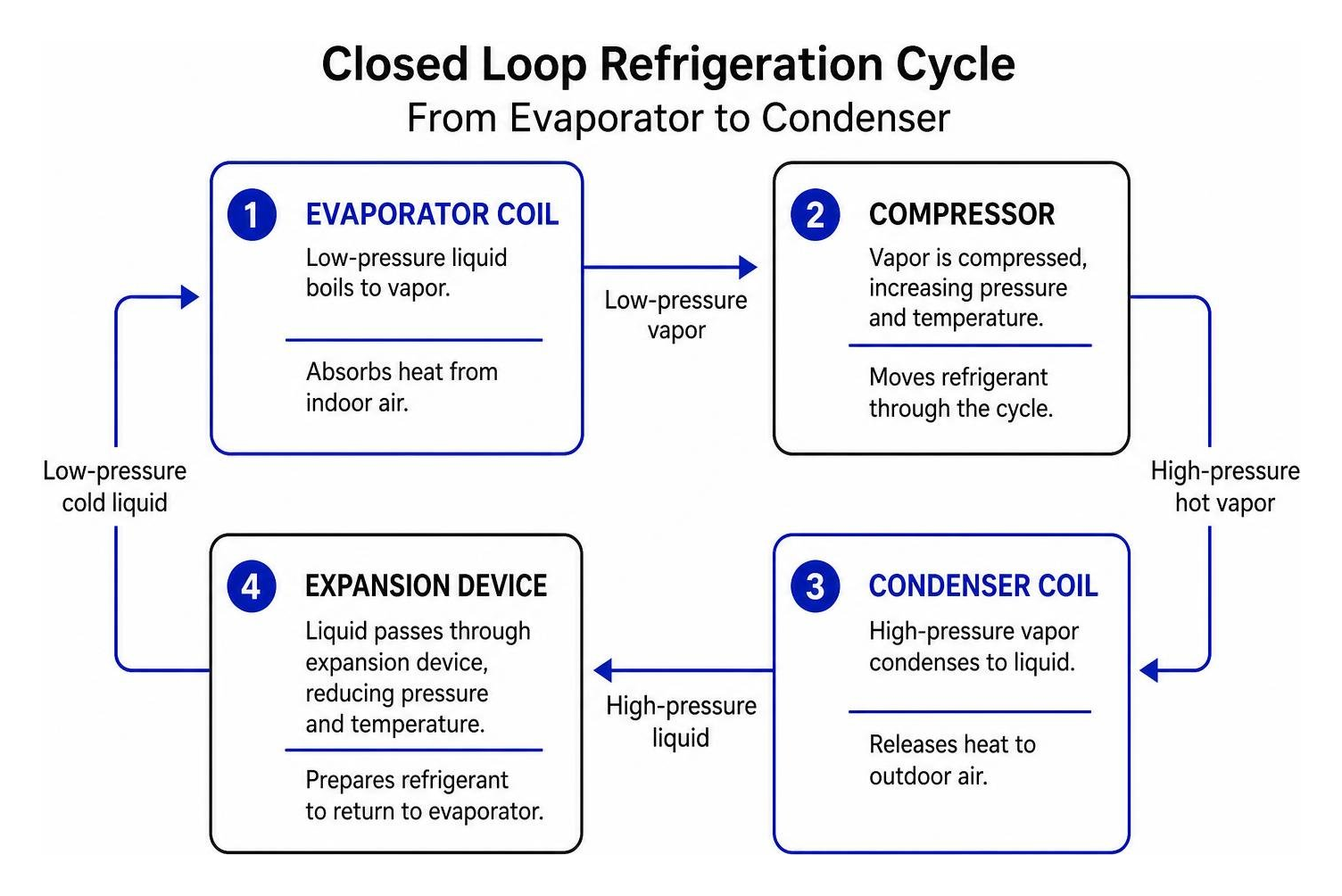
This thermal exchange depends on a continuous closed refrigeration cycle moving between two primary heat exchangers: the evaporator coil inside and the condenser coil outside. The refrigerant inside the lines changes state between liquid and gas to capture and discharge heat, as detailed in this Carrier guide on evaporator vs condenser coils.
Specification | Evaporator Coil | Condenser Coil |
|---|---|---|
Physical Location | Indoors (Air handler / Furnace plenum) | Outdoors (Inside condenser cabinet) |
Refrigerant State | Low-pressure liquid boiling to vapor | High-pressure vapor condensing to liquid |
Internal Temperature | Cold (~40°F) | Hot (~110°F to 140°F) |
Primary Function | Heat absorption & dehumidification | Heat rejection to outdoor air |
Airflow Interaction | Indoor return air drawn across fins | Outdoor ambient air pulled across fins |
Evaporator Coil Mechanics: Absorbing Indoor Heat
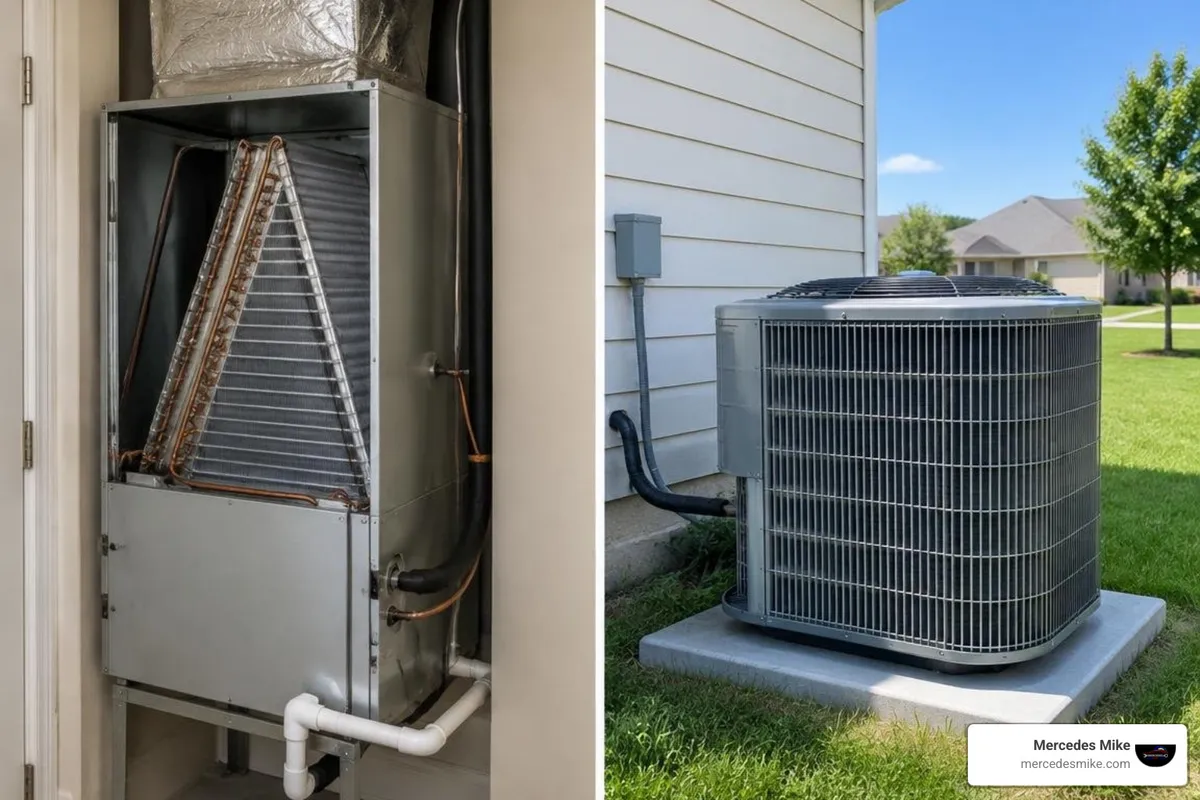
The evaporator coil is installed inside your home's air handler or attached to the furnace cabinet. As warm, humid indoor air is drawn across the aluminum fins by the blower fan, cold low-pressure liquid refrigerant circulating inside the copper tubing begins to boil.
This phase change absorbs sensible heat (lowering air temperature) and latent heat (removing airborne moisture). Because the surface of the coil operates at roughly 40°F, water vapor in your home's air condenses into liquid droplets on the coil fins, draining away through the condensate line. The result is chilled, dehumidified air distributed through your supply ducts.
Condenser Unit vs. Condenser Coil Terminology
Homeowners often use the terms "condenser unit" and "condenser coil" interchangeably, but they refer to different things:
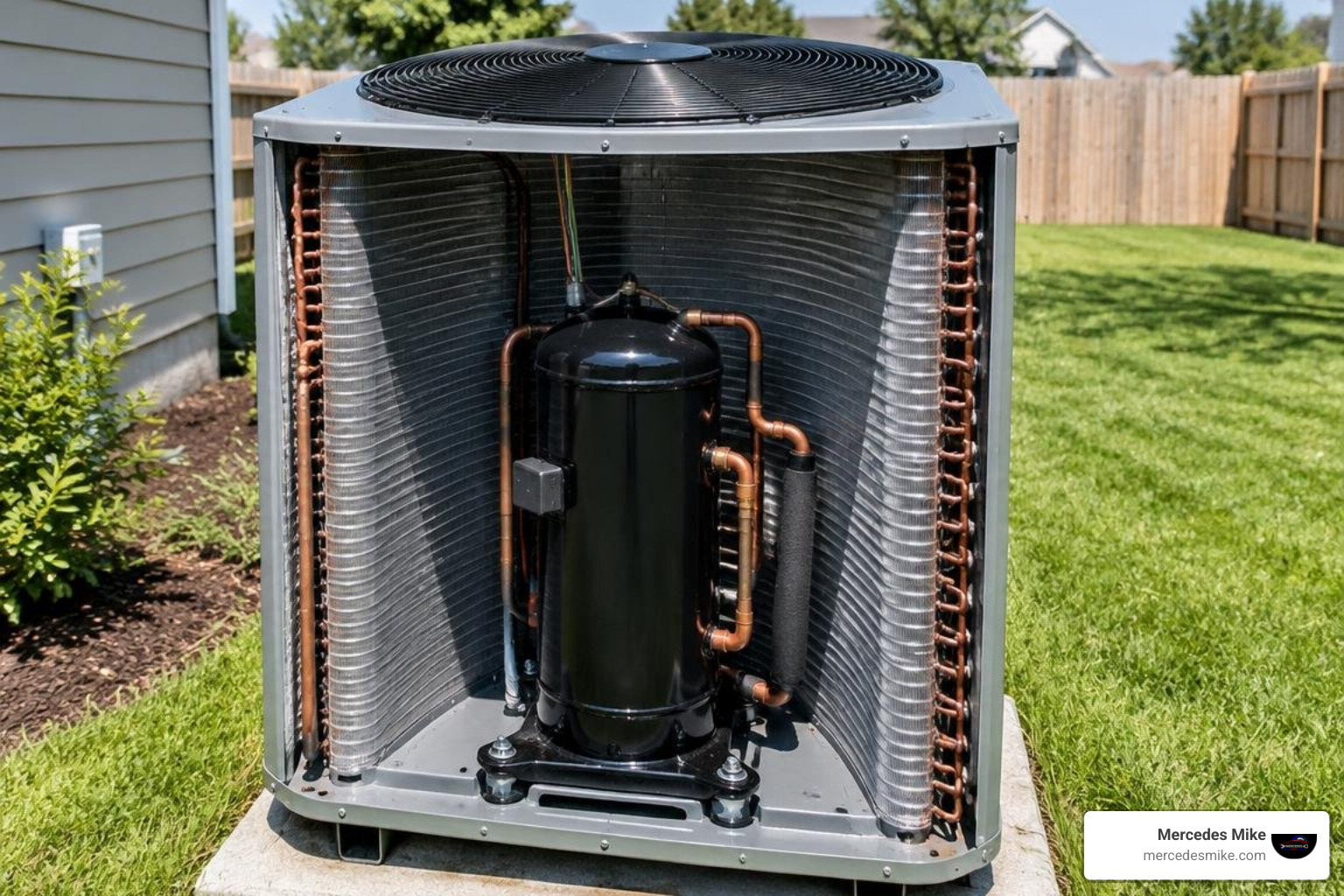
The Condenser Unit: The complete outdoor cabinet, including the protective grille, compressor, fan motor, electrical wiring, capacitor, and safety switches.
The Condenser Coil: The network of copper or microchannel aluminum tubes surrounded by closely spaced cooling fins wrapping around the interior perimeter of the outdoor cabinet.
The condensing coil receives superheated, high-pressure vapor straight from the compressor. As the outdoor fan draws ambient air across the fins, heat radiates into the atmosphere. This cooling causes the refrigerant vapor to condense back into a high-pressure liquid, undergoing subcooling before traveling back indoors.
Key Components and Thermodynamics of the Condenser System
The outdoor assembly manages substantial thermal loads. High head pressures and rapid heat transfer require high volume airflow—typically 350 to 400 cubic feet per minute (CFM) per ton of cooling capacity across indoor coils, matched by high-output propeller fans outdoors.
Role of the AC Condenser and Coil in Heat Rejection
Within the outdoor unit, the ac condenser and coil work together to shed heat through sensible and latent stages. First, the superheated gas must drop to its saturation temperature. Once desuperheated, latent heat transfer occurs as the vapor condenses into liquid without changing temperature.
To maximize this exchange, residential and automotive heat exchangers pack roughly 14 to 25 fins per inch (FPI). A standard 3-ton residential unit provides roughly 25 to 40 square feet of fin surface exposed to the cooling airstream.
Compressor, Fan Motor, and Electrical Controls
The outdoor cabinet houses several mechanical and electrical components:
Compressor: The mechanical pump that pressurizes low-temp vapor into hot, high-pressure gas. Because it handles the heaviest workload, it accounts for 30% to 50% of total unit replacement costs. Understanding the cost to fix ac compressor failures helps you weigh major repairs against a full system upgrade.
Condenser Fan & Motor: Draws outdoor air across the coil fins to dissipate heat.
Run Capacitor & Contactor Relay: The capacitor delivers the electrical phase shift needed to keep the compressor and fan running smoothly, while the contactor relay switches 240V high-voltage power based on low-voltage thermostat signals.
Condenser Configurations: Air-Cooled, Water-Cooled, and Evaporative
Depending on the application, condensing systems use different methods to reject heat:
Air-Cooled: Common in residential split systems and automotive setups. Ambient air is drawn over finned coils by an electric fan.
Water-Cooled: Common in large commercial buildings and high-rise structures. Water circulates through a shell-and-tube heat exchanger and sheds heat through an external cooling tower.
Evaporative: Combines air and water by spraying moisture over the condensing tubes while pulling air across them, utilizing wet-bulb cooling for higher industrial efficiency.
Common Problems: Diagnosing System Failures and Inefficiencies
When either coil fails to transfer heat cleanly, overall efficiency drops. The system runs longer cycles, consumes more electricity, and places extra strain on the compressor. Diagnostic guides like the InspectAPedia evaporator coil ice repair guide show that most cooling issues trace back to restricted airflow or compromised coil surfaces.
Dirt, Pollen, Salt Air, and Thermal Insulation
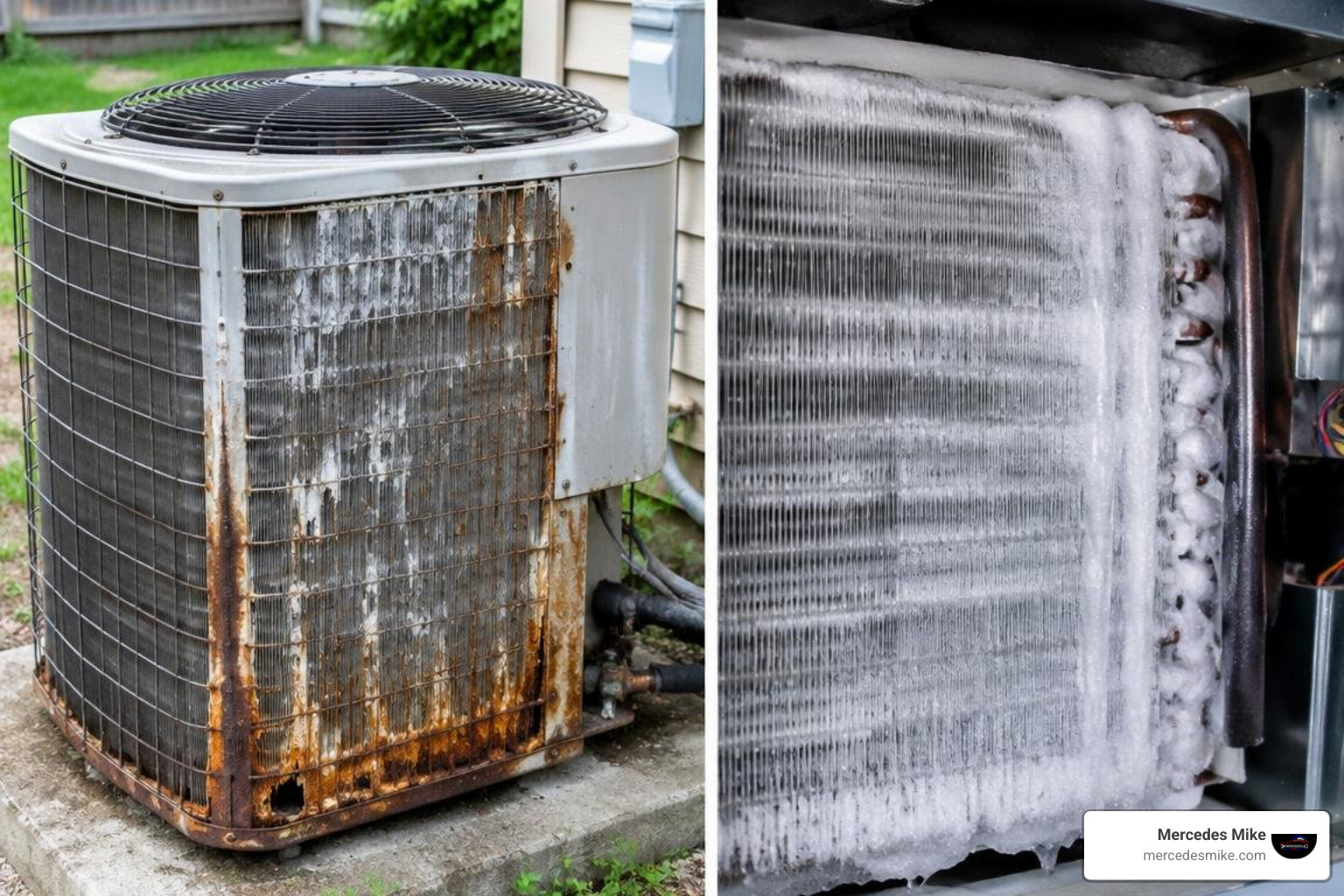
Because coil fins are packed closely together, they collect dust, grass clippings, and pollen over time. In South Florida coastal regions like Pompano Beach and Deerfield Beach, airborne sea salt creates an additional layer of salt crust that accelerates galvanic and formicary corrosion.
This debris layer acts like thermal insulation. When heat cannot escape through the outdoor coil, head pressure spikes, current draw climbs, and cooling output drops.
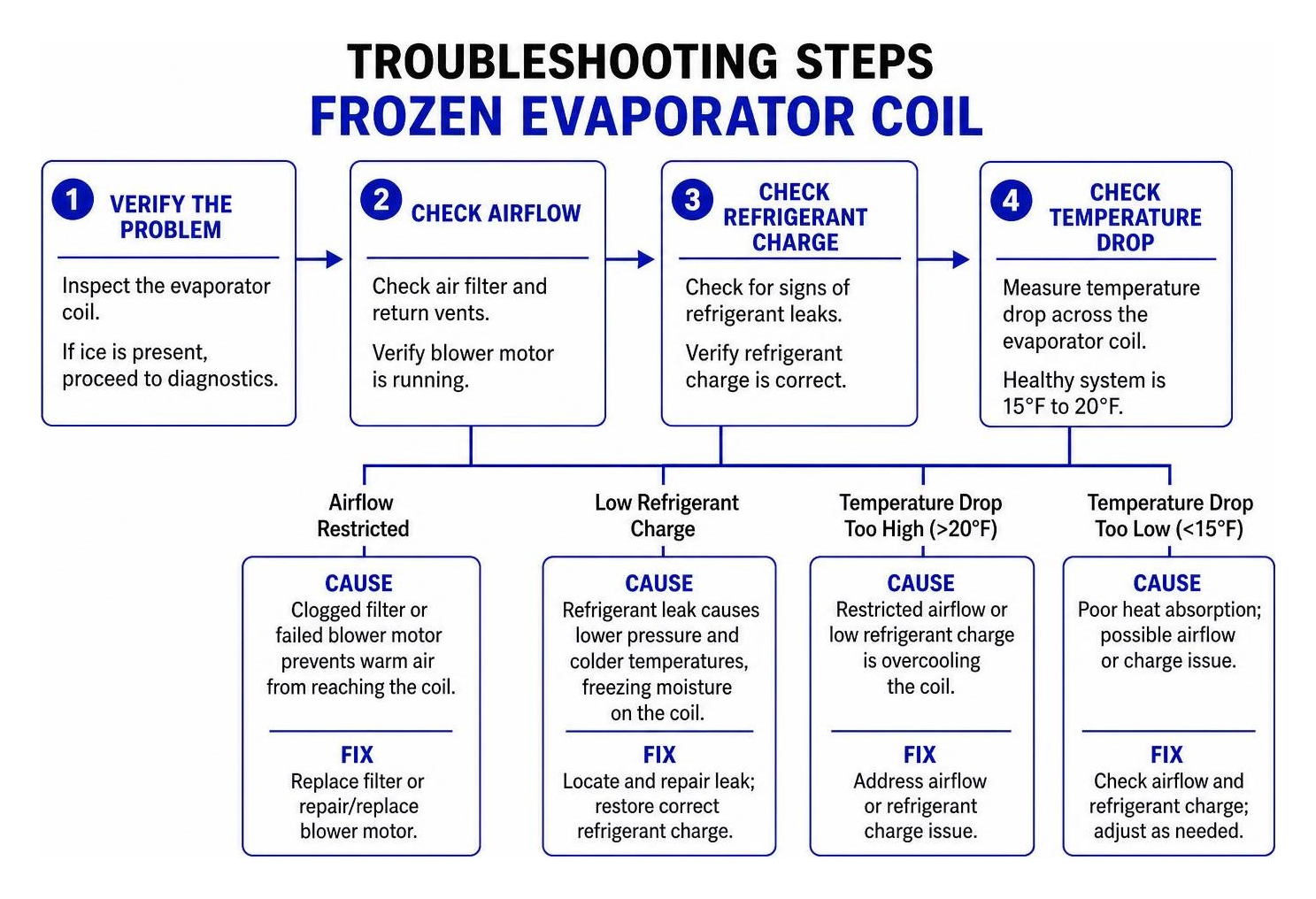
Causes and Fixes for Frozen Evaporator Coils
A frozen indoor coil might look like it is cooling exceptionally well, but ice buildup actually signals an inability to absorb heat:
Restricted Airflow: A clogged filter or failed blower motor prevents warm indoor air from reaching the coil. Without that thermal load, the coil temperature drops below 32°F, freezing moisture from the air onto the fins.
Low Refrigerant Charge: When refrigerant leaks out, the remaining fluid expands at a lower pressure and colder temperature, freezing surrounding condensation.
Diagnostic Temperature Drop: A healthy system maintains a 15°F to 20°F temperature drop across the evaporator coil. A significantly wider or narrower gap often points to airflow or charge imbalances.
Diagnosing AC Condenser and Coil Refrigerant Leaks
Refrigerant operates inside a hermetically sealed loop; it is not consumed or "burned up" during normal operation. A low charge always means there is a physical leak.
Vibrations, corrosion, and road debris can create microscopic pinholes in copper tubing or aluminum microchannel welds. Technicians locate these leaks using electronic halogen sniffers, ultraviolet dye tests, and nitrogen pressure tests before performing a targeted refrigerant leak repair.
Maintenance, Efficiency, and System Replacement Guidelines
Routine service protects your equipment and helps keep energy bills predictable. The average U.S. household spends $300 to $500 annually on cooling alone, and dirty coils can reduce overall system efficiency by up to 30%. Keeping your system serviced with routine AC unit maintenance prevents premature failures and extends equipment life.
Safe Cleaning Practices: DIY Steps vs. Professional Service
Homeowners can easily handle simple visual inspections and light surface cleanings:
DIY Step 1 (Filter Replacement): Check and replace 1-inch to 4-inch pleated air filters every 30 to 90 days.
DIY Step 2 (Clear Perimeter): Maintain at least 2 feet of clear space around the outdoor condenser unit by trimming back plants and clearing leaves.
DIY Step 3 (Gentle Rinsing): Turn off the dedicated electrical disconnect switch and use a regular garden hose to wash debris downward out of the fins. Never use a high-pressure washer, which bends the fragile aluminum fins and blocks airflow.
Deep cleanings, fin-comb straightening, electrical contactor replacements, and chemical foam treatments inside indoor air handlers should be handled by a licensed professional. When components wear out, our ac condenser repair cost guide breaks down expected expenses for parts, labor, and refrigerant recovery.
Sizing and Matched Coil Replacement
Proper equipment sizing is critical for comfort and humidity control. Sizing should rely on ACCA Manual J load calculations rather than basic square-footage estimates:
Oversized Systems: Cool the house too quickly without running long enough to remove humidity, leaving indoor air feeling cold and clammy.
Undersized Systems: Run continuously during peak afternoon heat, failing to reach the set temperature on the thermostat.
Matched Coil Performance: Replacing only an outdoor condenser while leaving an old indoor coil can cut efficiency, void manufacturer warranties, and cause oil-return problems for the compressor.
Automotive AC Condensers and Evaporator Coils
The underlying physics of vehicle air conditioning are identical to home HVAC systems, but automotive components operate in a much harsher physical environment.
In luxury German cars like Mercedes-Benz, BMW, Audi, and Porsche, the condenser is positioned at the very front of the engine cooling stack, right behind the front bumper grille. The evaporator core is installed inside the dashboard climate box alongside cabin air filters and electronic blend doors.
Vehicle Condenser Stress and Cabin Comfort in Coastal Climates
Automotive condensers face severe daily wear:
Road Debris & Physical Impact: Sitting low to the pavement, vehicle condensers are vulnerable to stones, road gravel, and insects that can bend fins and crack microchannel tubes.
Modern Refrigerants: Modern platforms use R-1234yf refrigerant, which features a low Global Warming Potential (GWP) of less than 1, replacing R-134a. These systems require precise charge weights and dedicated service equipment.
South Florida Driving Conditions: Between high humidity, highway heat, and salty ocean air in coastal Pompano Beach and Deerfield Beach, automotive AC systems work under heavy thermal stress.
When climate controls start blowing warm air, scheduling specialized Mercedes air conditioning service or comprehensive German auto ac recharge ensures that system pressures, cabin filters, and expansion valves match factory specifications.
Frequently Asked Questions About AC Condensers and Coils
Should I replace both the evaporator coil and condenser coil at the same time?
Yes, replacing both coils together is strongly recommended. Modern outdoor condensers are engineered to pair with specific indoor evaporator volumes and expansion valves to achieve their certified SEER2 efficiency ratings.
Pairing a new outdoor condenser with an aged indoor evaporator coil can cause mismatched heat transfer, poor oil return, premature compressor failure, and voided parts warranties.
What refrigerant do modern AC condenser units use in 2026?
Current residential systems use low-GWP refrigerants such as R-454B (Puron Advance), with a GWP of 466, and R-32, with a GWP of 675.
These modern blends replace R-410A (which has a GWP of 2,088) under EPA phase-down regulations to reduce environmental impact without sacrificing cooling performance.
Why does a dirty condenser coil increase energy bills?
When dirt, lawn debris, or salt build up on the outdoor fins, they create an insulating barrier that prevents hot refrigerant from releasing its heat.
Because the heat remains trapped in the refrigeration loop, the compressor must work harder and run longer to cool your space. This continuous extra load can increase electrical consumption by 20% to 30% and shorten the operating life of the compressor.
Conclusion
Your air conditioning system depends on a balanced thermal exchange between the indoor evaporator coil and the outdoor condenser coil. Keeping both coil surfaces clean, maintaining clear airflow, and fixing small refrigerant leaks early preserves cooling performance and helps avoid expensive component failures.
Whether you are maintaining a residential HVAC unit or need expert AC condenser repair for your high-performance German vehicle, precision diagnostics make all the difference. At Mercedes Mike, our experienced technicians use factory diagnostic tools to keep your climate systems running cleanly and reliably in the South Florida heat.