
Stop Letting HVAC Technicians Overcharge for Basic AC Servicing
What AC Servicing Charges Should You Expect in 2026?
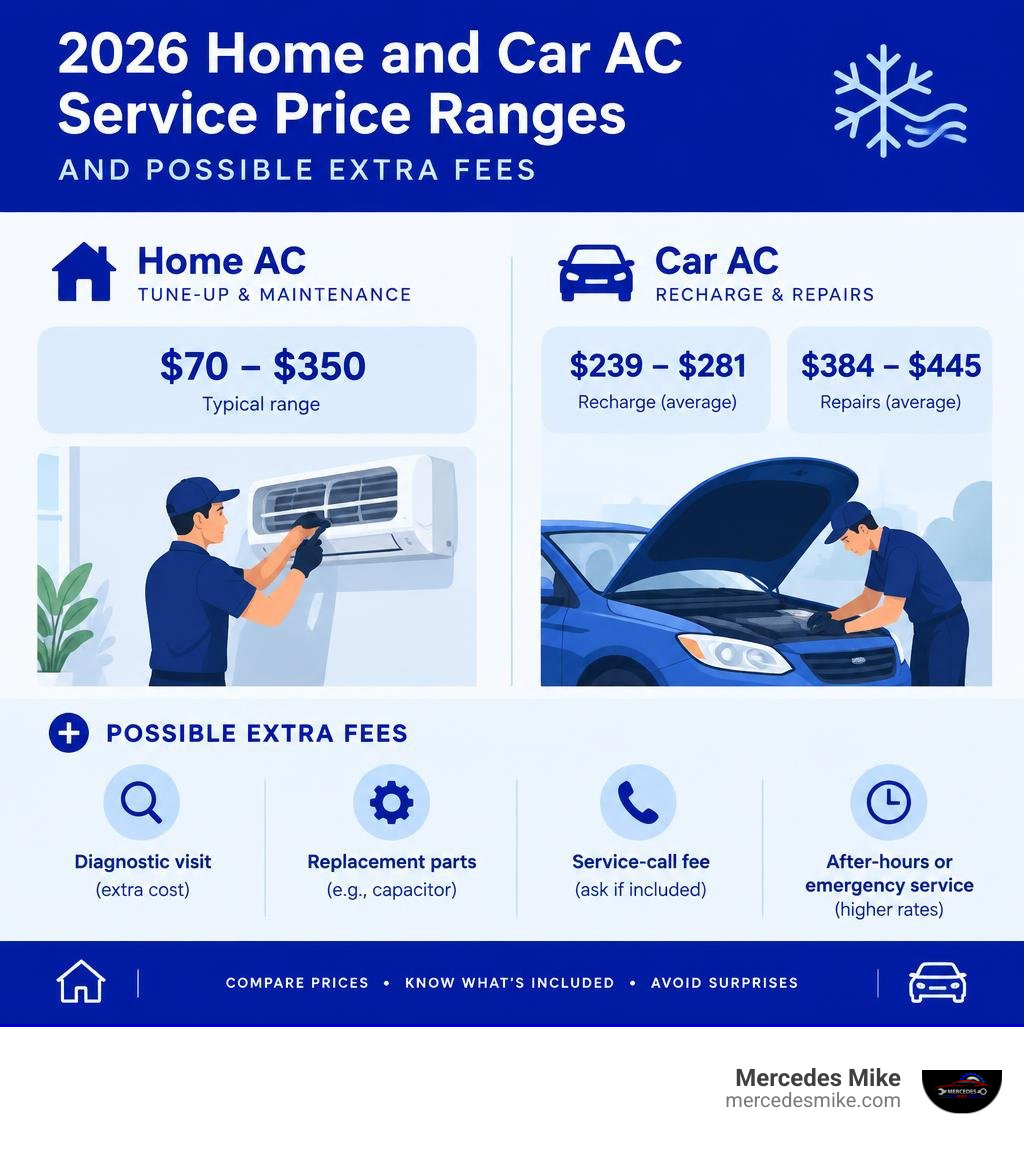
A routine home AC tune-up in the US typically costs $70 to $350. That covers maintenance, not major repairs. A diagnostic visit may cost extra, and parts such as a failed capacitor add to the bill. Ask whether the service-call fee is included in the quoted price before you book.
Car AC costs are different: a recharge averages $239 to $281, while broader repairs average $384 to $445. This guide separates home and vehicle prices so you can compare quotes without paying for work you did not approve.
I'm Mike Ibrahim, and I'll help you spot what's routine, what's extra, and what to ask before you say yes.
Average AC Servicing Charges and Typical Price Breakdown
Understanding typical ac servicing charges prevents unexpected sticker shock when an unexpected heatwave hits. Across residential properties, the national average for general air conditioning service ranges between $170 and $752, with most property owners paying roughly $354 for standard maintenance and minor adjustments.
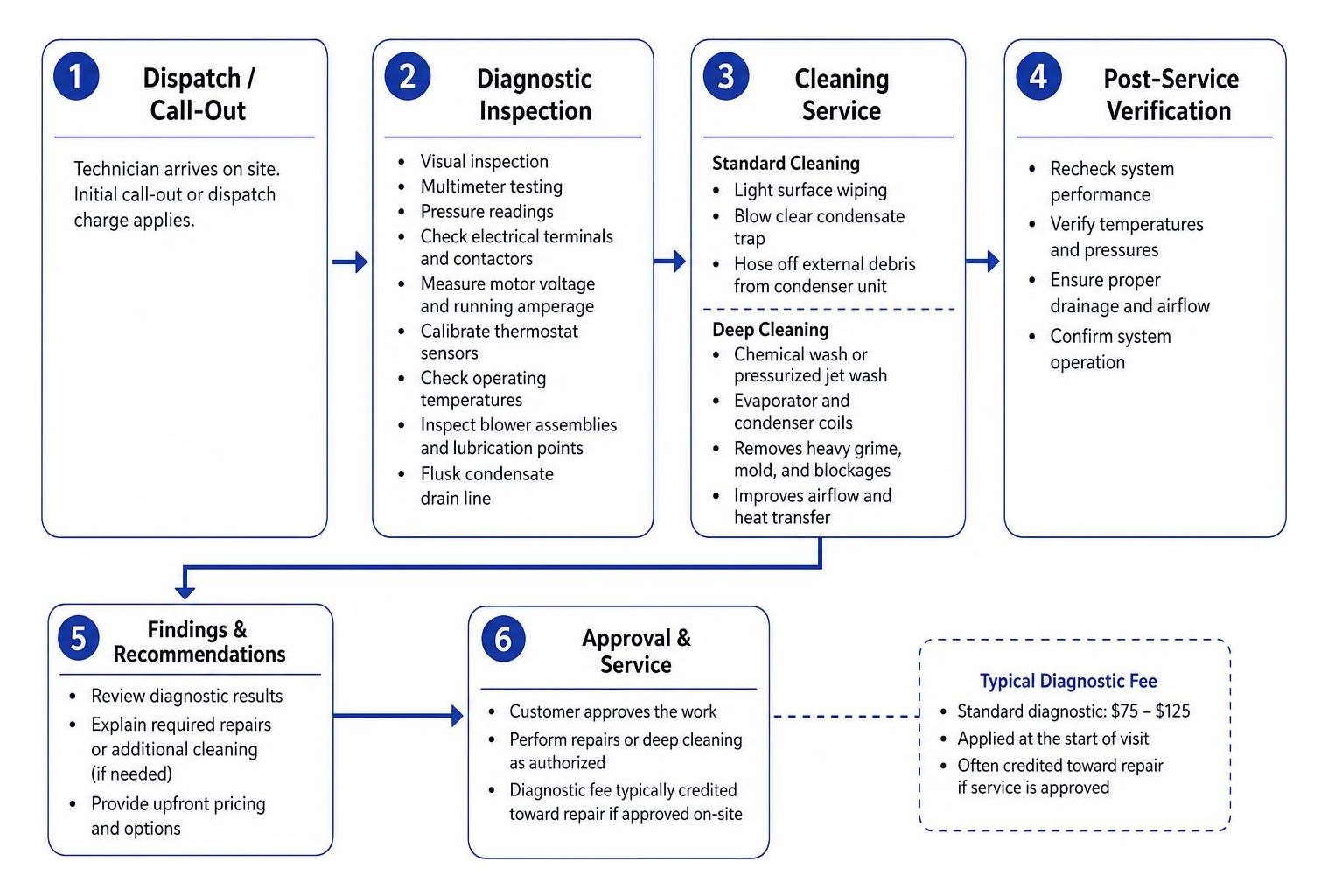
HVAC technicians typically bill using one of two methods: fixed flat-rate pricing or hourly labor rates. Hourly rates for licensed technicians average around $65 per hour, though specialized diagnostics or emergency visits can push labor higher. When technicians travel to your location, they frequently apply an initial call-out or dispatch charge simply to show up and inspect the equipment.
Service Type | Typical National Range | Average Cost | Scope of Work Included |
|---|---|---|---|
Residential Routine Tune-Up | $70 – $350 | $150 | Electrical check, filter check, drain flush, basic coil rinse |
Residential Diagnostic Call | $75 – $125 | $100 | Visual inspection, multimeter testing, pressure readings |
Residential Deep Coil Cleaning | $100 – $300 | $190 | Jet wash or chemical wash on evaporator and condenser coils |
Vehicle AC Diagnostic & Inspection | $80 – $150 | $110 | Pressure leak test, belt check, vent temperature assessment |
Vehicle AC System Recharge | $239 – $281 | $260 | Refrigerant evacuation, vacuum hold test, full recharge |
Vehicle Complete AC Repair | $384 – $445 | $415 | Component replacement (lines, seals, expansion valve, labor) |
Routine Maintenance and Diagnostic Call Fees
A routine seasonal tune-up serves as preventative care designed to keep machinery operating efficiently and prevent expensive breakdowns. During a standard visit, a technician performs several specific diagnostic tasks:
Inspecting and tightening all electrical terminals and contactors
Testing electrical draw by measuring motor operating voltage and running amperage
Calibrating thermostat sensors for accurate cycling
Flushing the primary condensate drain line to prevent indoor water overflow
Checking operating temperatures across supply and return plenums
Inspecting blower assemblies and lubrication points
Understanding the baseline cost of AC maintenance allows you to budget effectively each spring. Standard diagnostic fees generally run between $75 and $125. Many reputable service providers credit this initial diagnostic fee toward the total cost of any repair work if you approve the service on the spot. Always verify upfront whether the diagnostic fee is waived upon authorizing the fix.
Understanding Standard vs Deep Cleaning AC Servicing Charges
There is a substantial difference between basic maintenance and a deep cleaning service. Standard AC unit maintenance involves light surface wiping, blowing clear the condensate trap, and hosing off external debris from the outdoor condenser unit.
When coils accumulate heavy grime, biological growth, or baked-on dirt, standard water rinses fail. Deep cleaning requires specialized chemical detergents or pressurized water jetting to penetrate dense fin packs. Professional services, such as specialized Aircon Services & Pricing, demonstrate how chemical washes and pressurized coil overhauls eliminate stubborn drainage blockages and heavy mold accumulation that cause water leaks and restricted airflow. Deep coil cleaning usually adds $100 to $300 to standard maintenance fees, but it restores heat transfer capability and significantly reduces electrical strain on the blower and compressor.
Key Factors That Inflate What Technicians Charge
Several technical variables influence what you ultimately see on an invoice:
Physical Accessibility: Units placed in tight crawlspaces, steep roofs, or narrow attic spaces require extra labor and safety setup, raising overall service fees.
Refrigerant Type: Systems running on modern R-410A refrigerant cost significantly less to recharge than older legacy systems using R-22 Freon, which has been phased out under EPA regulations, making remaining supplies rare and costly.
Emergency Service Windows: Booking service during peak summer afternoons, over holiday weekends, or outside regular business hours often adds an emergency surcharge of 50% to 100% onto standard labor rates.
Common Component Repairs and Replacement Pricing
When routine inspections uncover worn electrical parts or mechanical failures, service visits transition from basic tune-ups to component repairs.
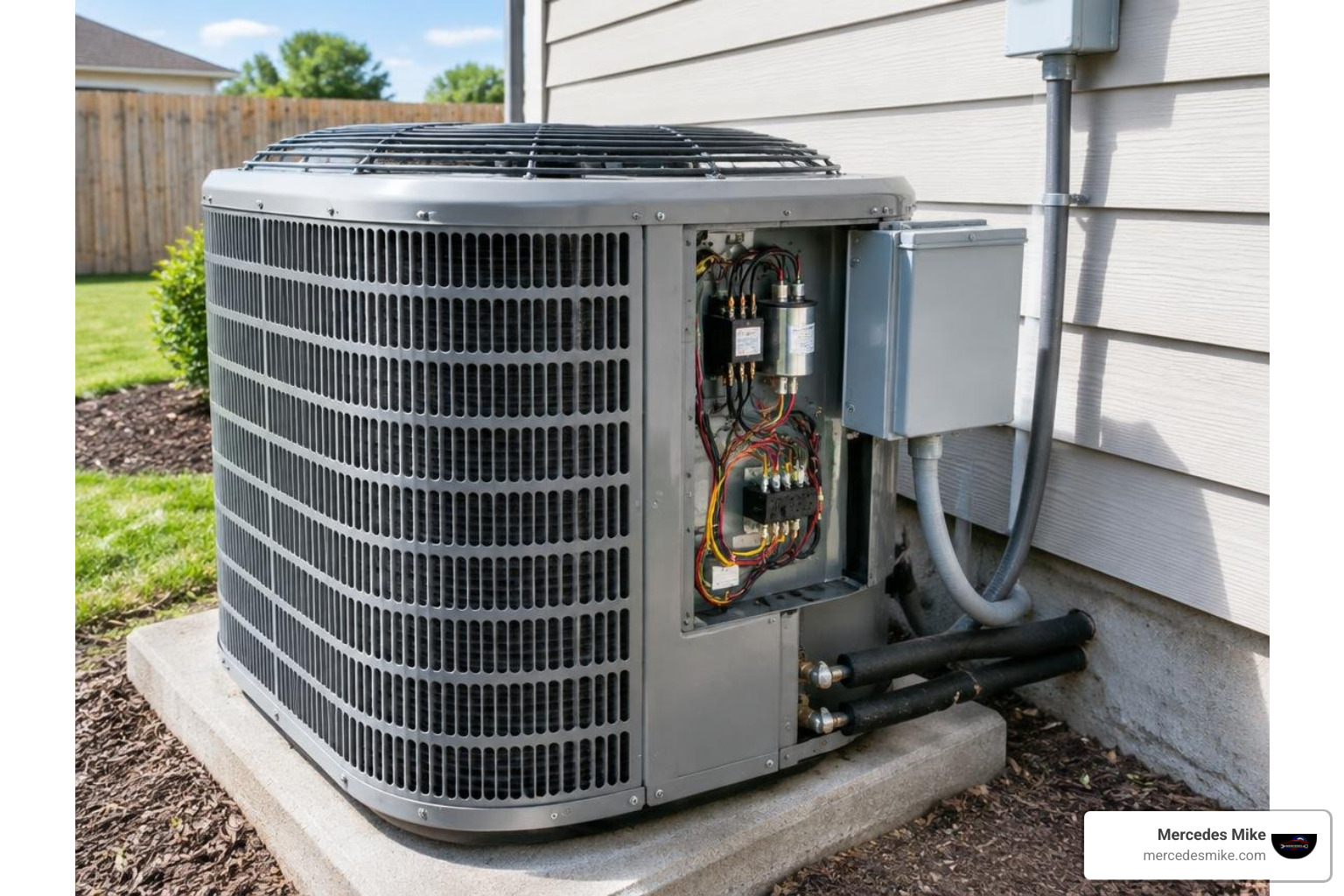
Capacitors: The dual-run capacitor provides the electrical boost necessary to start and run compressor and fan motors. Replacing a weak or swollen capacitor typically costs between $100 and $400.
Contactor Switches: Heavy electrical arcing pits contactor points over time. Replacing this switch runs between $150 and $350.
Blower and Fan Motors: Failed fan motors cause immediate overheating. Replacement costs range from $350 to $1,200 depending on whether the motor is a basic single-speed or variable-speed ECM motor.
Compressor Replacement: As the heart of the refrigeration cycle, replacing a failed compressor is the most expensive repair, running between $1,500 and $3,000 or more. Reviewing the overall cost to fix AC compressor issues helps determine if replacement makes financial sense over buying a new system.
Refrigerant Leaks: Locating and sealing a pressurized line crack can range anywhere from $200 to $1,000 depending on location and coil damage. Proper refrigerant leak repair must always be performed before adding new gas, as charging a leaking unit wastes money and violates environmental standards.
Automotive vs Residential AC Servicing Charges Explained
While both systems rely on the closed-loop vapor compression refrigeration cycle, automotive and residential air conditioners operate in distinctly different environments.
Automotive systems endure continuous road vibrations, rapid engine temperature fluctuations, and direct exposure to debris. A complete car AC repair cost guide outlines how vehicle repairs average between $384 and $445, with complete automotive compressor replacements averaging $1,546 to $1,705 due to tight engine bay access and specialized recovery machinery.
When cooling performance drops in a vehicle, scheduling a standard air conditioning recharge costs approximately $239 to $281. This process safely evacuates old refrigerant, runs a vacuum hold test to ensure hermetic sealing, and injects fresh refrigerant with specialized lubricating oil to factory specifications.
How to Avoid Hidden Fees and Save Money on Service Calls

Unscrupulous service companies sometimes advertise ridiculously low tune-up rates—such as $29 or $49 specials—simply to get a foot in your door. Once on site, technicians may present exaggerated diagnostic reports claiming catastrophic failure unless you purchase costly, unneeded parts.
To protect your wallet, use these straightforward strategies:
Insist on Upfront, Flat-Rate Estimates: Never allow a technician to begin work under an open-ended hourly agreement without a defined cap. Demand a clear, written estimate detailing parts, labor, and diagnostic credits before authorizing repairs.
Maintain Air Filters Regularly: A dirty, restricted air filter forces blowers to work harder, drops indoor airflow, and freezes evaporator coils. Replacing standard filters every 30 to 90 days prevents avoidable breakdowns.
Book Pre-Season Maintenance: Schedule checkups in early spring before summer demand spikes. Service companies often provide off-season promotional discounts to keep schedules full.
Evaluate Structured Maintenance Plans: Structured Maintenance Programs and Inspection Tiers provide multi-point inspections starting at $59.95 to $79.95, bundling routine checks with 10% to 15% discounts on parts and priority scheduling during peak heat waves.
Deciding Between Repair and System Replacement
When facing an extensive repair estimate, weigh the age of your equipment against the cost of the repair. A practical guideline is the $5,000 Rule: multiply the age of your air conditioning unit (in years) by the total repair estimate (in dollars). If the resulting number exceeds $5,000, replacing the unit with a modern, high-efficiency system is generally more economical than repairing it.
Similarly, if your system is over 10 to 12 years old and the repair quote exceeds 50% of the cost of a replacement unit, investing in new equipment avoids sinking money into an aging machine nearing the end of its design life. Consulting a comprehensive AC repair cost guide provides valuable benchmarks to evaluate whether component replacement offers lasting value.
Frequently Asked Questions About AC Service Costs
What is the typical diagnostic fee for an AC service call?
Diagnostic visit fees typically range from $75 to $125. This fee covers travel expenses, initial system evaluation, and electrical testing with specialized equipment. Most reputable technicians apply this charge toward the total repair cost if you approve the recommended repairs during the same appointment.
Is an annual maintenance contract worth the investment?
Yes. An annual maintenance contract (costing between $120 and $350 per year) generally includes two comprehensive seasonal tune-ups, priority service during emergency heatwaves, and 10% to 15% discounts on replacement parts. Catching minor electrical or refrigerant issues early routinely prevents catastrophic compressor failures.
Why are refrigerant recharges so expensive?
Refrigerant recharges require specialized recovery equipment, EPA-certified technicians, and dedicated leak detection procedures. Because cooling systems are sealed loops, losing refrigerant indicates a physical leak. Technicians must find and repair the leak, pull the system into a deep vacuum to remove moisture, and recharge the exact weight of refrigerant, which carries high material and labor costs.
Conclusion
Understanding your cooling system's maintenance needs ensures you receive fair, transparent pricing without paying for unneeded repairs. At Mercedes Mike, our decades-experienced technicians use the latest tools for all diagnostics and repairs across Pompano Beach, Deerfield Beach FL, and the broader South Florida region. Whether you need a precision climate control inspection or major mechanical overhaul, we focus on clear, honest communication and reliable service. Protect your vehicle's performance by booking our trusted vehicle maintenance and repair services today.