Stop Driving in a Sauna with a Fresh Car AC Condenser
What Is an Auto AC Condenser and How Does It Work?
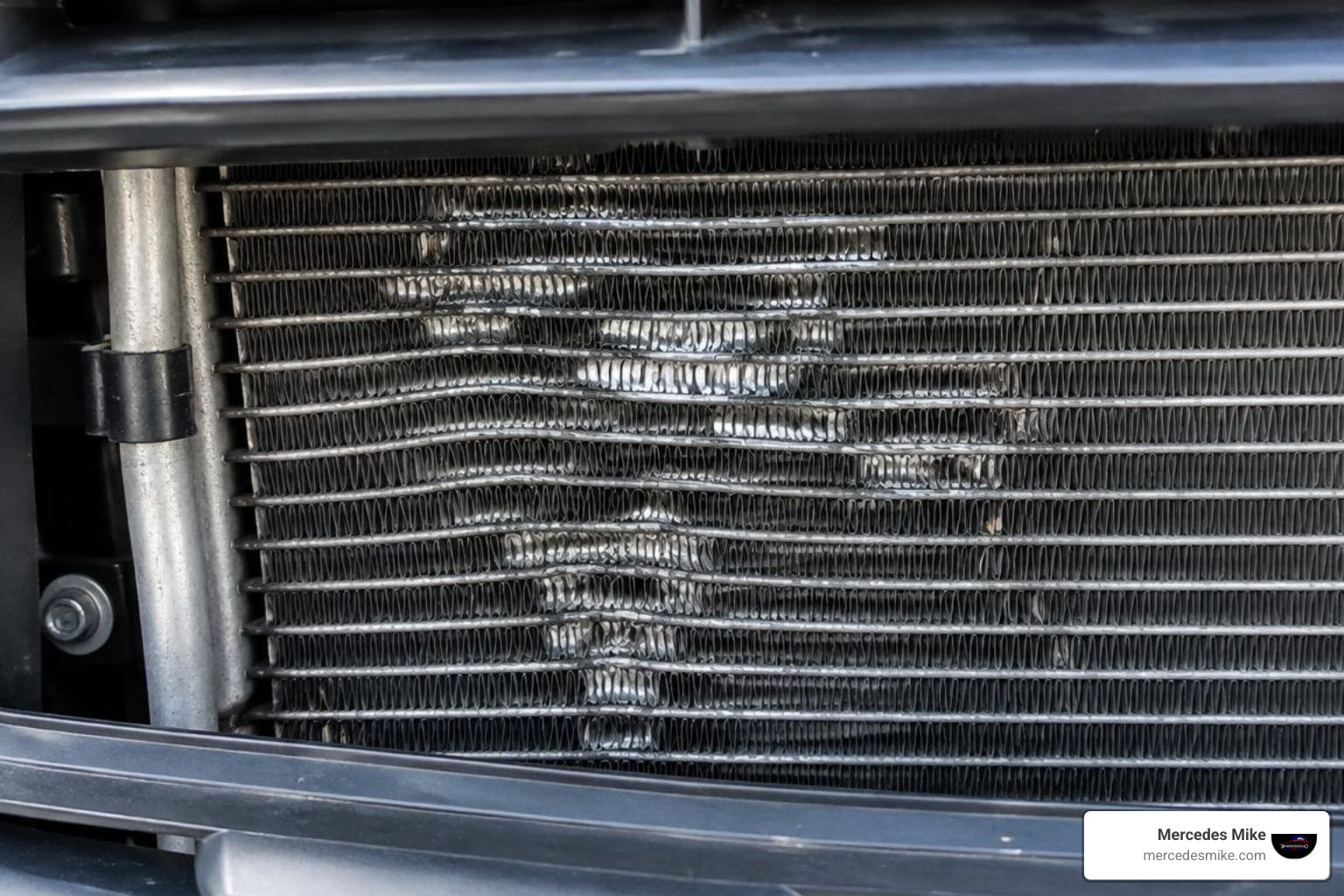
To understand how an air conditioning system chills your vehicle's cabin during a sweltering South Florida afternoon, think of the system not as a creator of cold, but as a remover of heat. At the center of this thermal extraction is the auto AC condenser.
Mounted directly behind the vehicle's front grille—typically bolted in front of or alongside the engine coolant radiator—the condenser is a lightweight, all-aluminum heat exchanger. Its functional role mirrors that of your engine's main radiator, but instead of cooling engine antifreeze, it cools high-pressure chemical refrigerant.
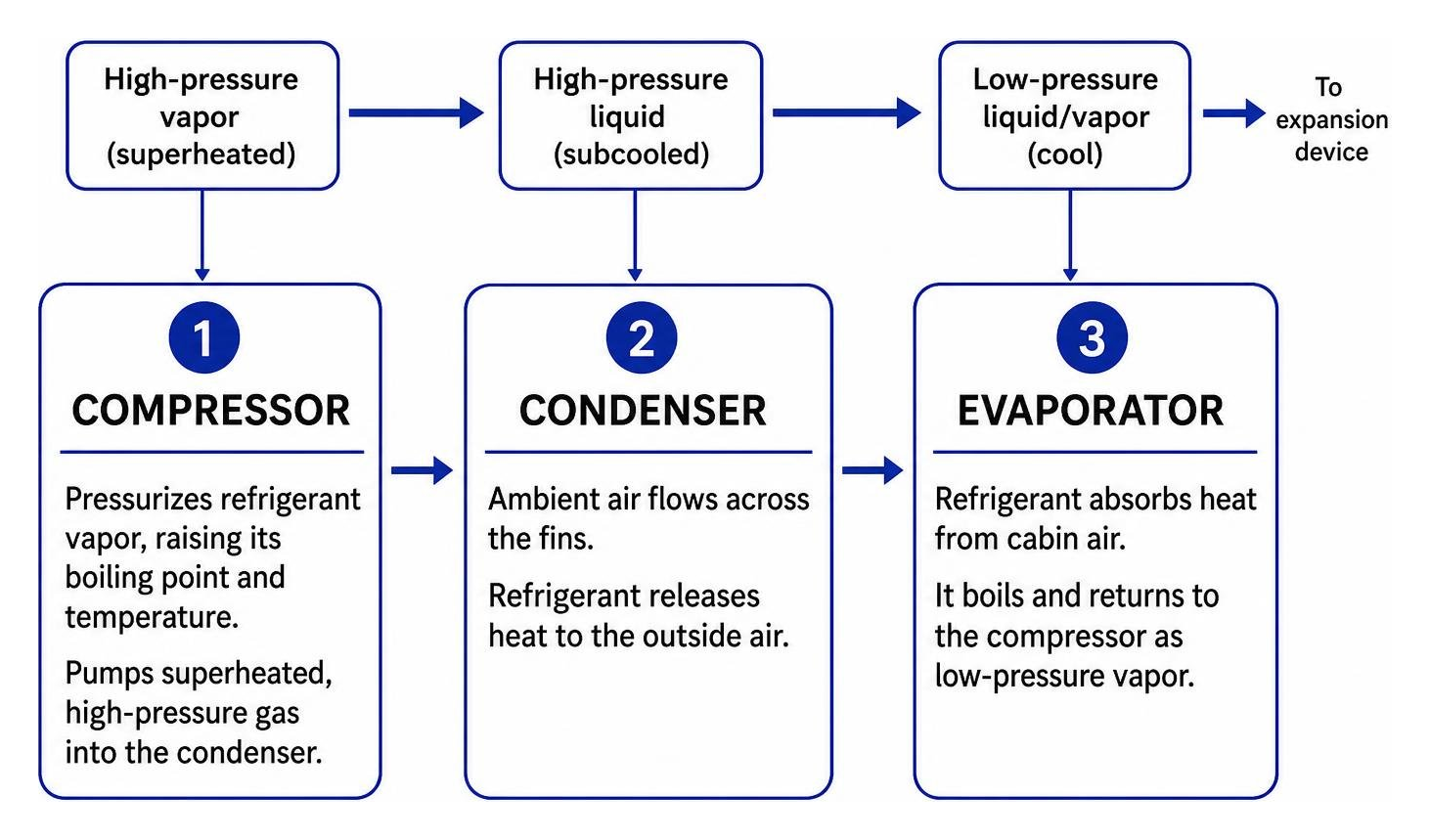
The refrigeration cycle operates through continuous thermodynamic phase changes:
Compression: The AC compressor pressurizes vaporized refrigerant, raising both its boiling point and its temperature. It pumps this superheated, high-pressure gas into the top inlet of the condenser.
Heat Dissipation: As this hot vapor travels through the condenser’s internal passages, ambient outdoor air rushes across the thin external aluminum cooling fins (drawn in by vehicle forward motion or pulled through by electric auxiliary cooling fans).
Phase Transition (Condensation): As the refrigerant sheds its latent thermal energy to the outside air, it drops below its condensation temperature. It changes physical states—transforming from a blistering, high-pressure gas into a subcooled, high-pressure liquid.
Downstream Delivery: This cooled liquid refrigerant exits the lower condenser outlet and flows directly to the receiver drier or desiccant cartridge, which removes residual moisture before sending the fluid toward the expansion valve and cabin evaporator core.
Modern vehicles charge their climate control systems with specific refrigerants designed around tight thermodynamic properties, primarily R134a or the newer low-global-warming R1234yf (and historically, R12 in vintage vehicles). Regardless of the chemical blend, the condenser must maintain structural integrity under continuous operating pressures ranging between 150 and 350+ PSI.
Serpentine Flow vs. Parallel Flow Designs
Automotive condenser engineering has evolved significantly over the decades, transitioning through distinct core designs to maximize heat transfer efficiency in increasingly crowded engine bays.
Serpentine Flow Cores: Early automotive air conditioning systems relied on a serpentine tube layout. In this configuration, a single, continuous aluminum or copper-brass tube weaves back and forth from the top inlet to the bottom outlet. While durable and simple to flush clean with chemical solvent during maintenance, serpentine cores have lower total surface contact area and struggle to meet the extreme heat-rejection demands of modern compact European HVAC packages.
Parallel Flow (Microchannel) Cores: Standard in almost all modern production vehicles, parallel flow condensers feature top and bottom (or side) manifold headers connected by dozens of tiny, extruded microchannel tubes. By dividing refrigerant into multiple simultaneous streams, parallel flow units increase surface-area contact, dramatically accelerating heat rejection. However, these miniature internal passages (often less than 1 mm wide) make it impossible to safely flush out metal shavings if an upstream compressor disintegrates; a contaminated parallel flow condenser must always be replaced.
Common Causes of Condenser Failure and Warning Signs
Because the condenser occupies real estate at the very front of the vehicle clip, it bears the brunt of road debris, weather, and thermal cycling. Recognizing the operational symptoms of a failing unit helps prevent collateral damage to the compressor.
Signs of a Failing Auto AC Condenser
When a condenser begins to degrade or leak, you will generally experience clear performance warnings:
Warm Air Flowing from the Vents: The most direct indicator. If the condenser cannot shed heat—or if system pressure drops due to a leak—the evaporator inside your dashboard cannot absorb cabin heat, resulting in lukewarm air blowing from the HVAC registers.
Loss of Cooling While Idling: If cabin air is moderately cool while cruising on the highway but turns instantly warm when stopping at red lights in Pompano Beach or Deerfield Beach FL, the condenser may have bent fins, road grime buildup, or an accompanying auxiliary fan failure that prevents low-speed heat transfer.
Sweet Chemical Odor or Oily Residue: Automotive refrigerant vaporizes instantly upon contact with air, but the PAG lubricating oil suspended within it does not. A leaking condenser core often develops oily, dark dirt accumulation spots around the puncture point.
AC Compressor Cycling Rapidly or Locking Out: Low pressure sensors detect refrigerant loss and disengage the AC compressor clutch or control valve to prevent running the pump dry.
When diagnosing tricky climate control problems, accurate refrigerant leak repair relies on injecting high-visibility UV-reactive dye into the charging ports. After running the system under high pressure, technicians use a high-intensity ultraviolet blacklight to pinpoint neon-green luminescence escaping from microscopic pinholes or hairline tube fractures.
Primary Causes of Physical and Internal Damage
Road Debris and Stone Impacts: Sitting exposed behind low bumper grilles, high-speed gravel, rocks, and highway debris can crush delicate aluminum fins or puncture the pressurized refrigerant tubes. Even a pinhole leak vents the entire system charge within hours or days.
Corrosion and Environmental Exposure: Coastal living in South Florida exposes vehicles to airborne salt spray, which gradually corrodes raw aluminum exterior tubes. Winter road salt from northern travel creates similar galvanic oxidation, causing metal walls to weaken and pit.
Internal Clogging and Desiccant Breakdown: If a receiver drier's internal desiccant bag ruptures or an aging system suffers from internal moisture, acid formation and debris collect inside the condenser's microscopic passages.
Compressor Failure Contamination: When an AC compressor suffers internal mechanical failure (often called "black death"), it sheds microscopic metallic fragments throughout the high-pressure line. These metal filings lodge permanently into the condenser core, creating severe thermal bottlenecks. Factoring in the cost to fix an ac compressor alongside a fouled condenser is essential when restoring a completely neglected climate control system.
Repair vs. Replacement: Making the Right Decision
Vehicle owners often wonder whether an expensive air conditioning component can simply be repaired rather than fully swapped out. With automotive condensers, the answer depends strictly on whether the issue is airflow restriction or pressurized tube rupture.
Can an AC Condenser Be Repaired?
Fins vs. Tubes: If the damage is limited to superficial bent cooling fins (caused by pressure washers or minor insect impacts), the unit can often be serviced using a specialized plastic or metal fin comb tool. This straightens the thin louvers and restores ambient airflow without opening the sealed refrigerant circuit.
Brazing Aluminum Punctures: While specialty shops can technically weld or braze an accessible external puncture on an aluminum tube, doing so is rarely practical or cost-effective for modern automotive applications. Modern condenser tubes have wafer-thin walls engineered for heat conduction, not weld strength. Brazing alters the metal temper, easily burns through adjacent tubes, and rarely withstands dynamic 300+ PSI pressure surges over long heat cycles.
Reliability and Warranty: When assessing professional ac condenser repair, installing a brand-new, factory-tested replacement core is the only method that ensures leak-free reliability and preserves downstream component warranties.
How to Choose the Right Replacement Auto AC Condenser
Selecting a proper replacement involves balancing precision engineering against parts budgets:
Genuine OEM vs. Premium OE-Tier Aftermarket: For complex European platforms (such as Mercedes-Benz, BMW, Audi, and Porsche), build tolerances matter. Genuine factory parts or OEM-tier suppliers like Mahle Behr and Nissens match original core thicknesses, mounting brackets, line angles, and integrated sub-coolers. Standard high-volume domestic or Japanese platforms also offer quality genuine replacement paths, such as direct-fit Mopar genuine condensers, factory Toyota components, or Honda condenser assemblies.
Integrated vs. Standalone Filter-Driers: Many modern European platforms, including selected BMW performance platforms, design the condenser with an integrated receiver-drier cartridge receiver pre-mounted to the side tank. Ensure your replacement includes this sub-assembly or order the appropriate desiccant insert separately.
Budget Planning: Condenser part costs range from $90 to $350 for standard passenger applications and $300 to $650+ for complex dual-clutch transmission or auxiliary-cooled European platforms. For a comprehensive overview of parts and labor breakdowns across current vehicle platforms, review our car ac repair cost guide 2026.
Condenser Replacement Process and Related Components
Replacing an automotive AC condenser requires disassembling front-end bodywork, managing high-pressure chemical recovery, and ensuring pristine internal cleanliness.
Supporting Components to Replace Simultaneously
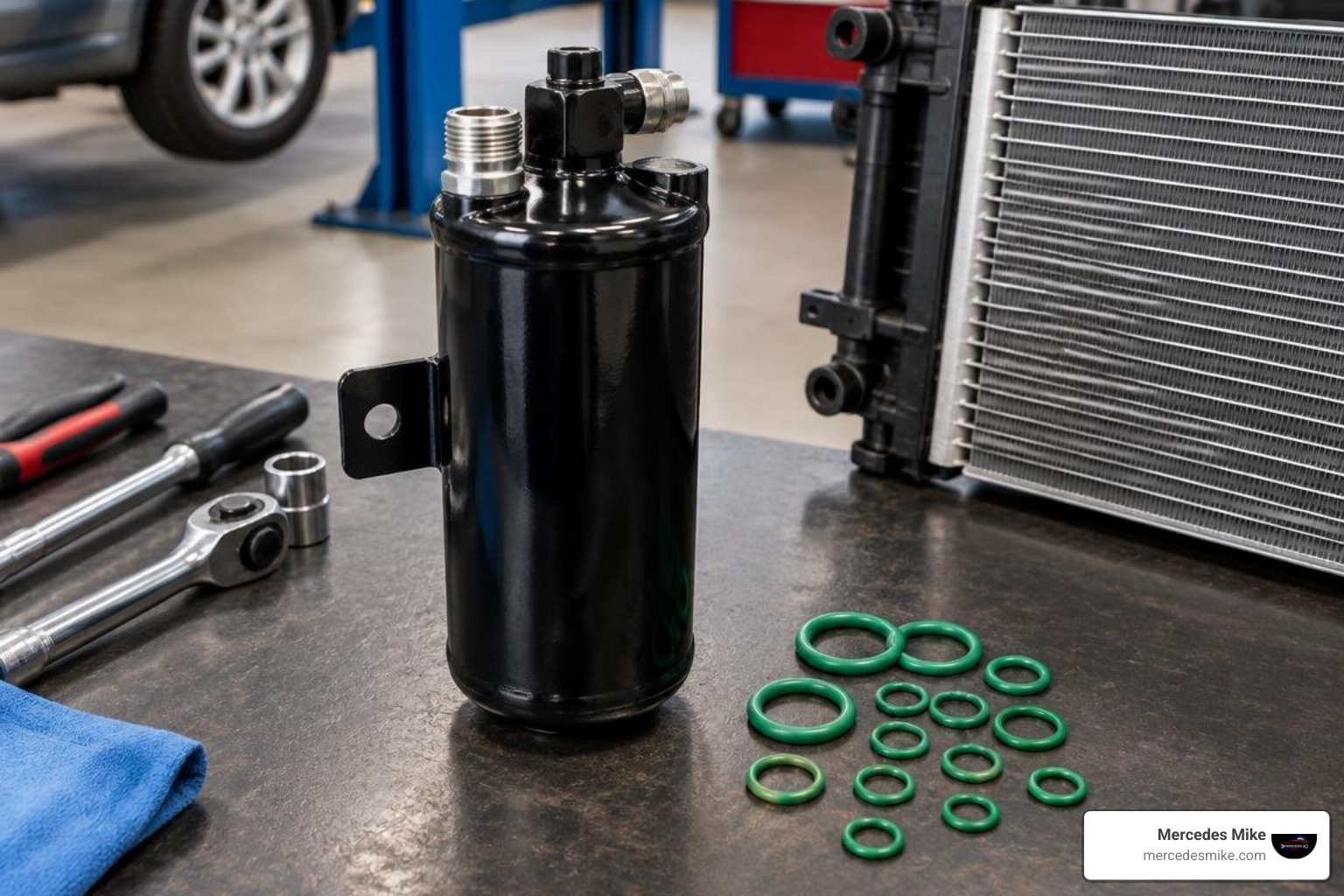
Replacing just the condenser while leaving old, contaminated wear items in place invites repeat system failure. A proper overhaul includes:
Receiver Drier / Accumulator: The desiccant inside the drier absorbs atmospheric moisture and acid. Any time the closed AC system is opened to ambient air for more than a few minutes, the desiccant saturates. Replacing the drier is mandatory for warranty compliance on almost all compressors and condensers.
High-Temperature HNBR O-Rings: Air conditioning fittings use specialized hydrogenated nitrile butadiene rubber (HNBR, typically green or purple) O-rings engineered to resist chemical degradation from R134a/R1234yf and synthetic compressor oils. Reusing old, flattened O-rings guarantees slow refrigerant seepage.
Thermal Expansion Valve (TXV) or Orifice Tube: Debris liberated during a condenser failure easily clogs the microscopic metering orifice of the expansion valve, starving the evaporator core of refrigerant.
PAG Lubricant Balancing: A portion of the system's total PAG (Polyalkylene Glycol) oil charge resides pooled within the lower chambers of the old condenser. When installing a dry replacement, a calibrated amount of fresh, clean PAG oil of the correct viscosity (PAG 46, PAG 100, etc.) must be added back into the core before line connection.
Professional Installation vs. DIY Considerations
While physical unbolting of bumper covers and radiator brackets may seem accessible to a capable home mechanic, servicing the pressurized refrigerant circuit requires strict adherence to environmental regulations and dedicated diagnostic equipment:
Federal EPA Section 609 Mandates: It is a violation of federal law to vent automotive refrigerants into the atmosphere. Professional shops use certified recovery machines to extract, weigh, and recycle old refrigerant cleanly.
Deep Vacuum Evacuation: Before new refrigerant can be charged, the assembled system must be pulled down to a deep vacuum (minimum 29.5 inHg or under 500 microns) for at least 30 to 45 minutes using a specialized vacuum pump. This boiling process removes ambient humidity and trapped air from the lines; failing to pull a deep vacuum leads to internal acid formation and poor cooling.
Precision Weigh-In Charging: Modern AC systems operate with razor-thin refrigerant charge tolerances (often within ±0.5 ounces). Overcharging causes sky-high head pressures that strain the engine, while undercharging leads to warm air. Completing an accurate air conditioning recharge requires calibrated digital scales or automated recovery stations.
Frequently Asked Questions About Car AC Condensers
How can I protect my condenser from road debris?
You can install aftermarket protective mesh grilles behind your vehicle’s lower bumper openings. These durable, fine-gauge aluminum or ABS plastic screens catch stones, gravel, and large insects before they strike the delicate condenser fins, while maintaining necessary airflow for engine and climate cooling. Additionally, leaving adequate following distance behind gravel haulers and heavy construction trucks on the highway reduces the likelihood of high-speed debris strikes.
How long should a car AC condenser typically last?
Under ideal conditions, an auto AC condenser can last the life of the vehicle (10 to 15 years, or 150,000+ miles). However, in high-humidity or coastal salt-air environments like South Florida, environmental corrosion and road debris exposure often reduce practical service lifespans to between 6 and 10 years. Routine visual inspections and prompt cleanings help preserve the aluminum alloy.
Does a damaged condenser affect engine cooling?
Yes. Because the AC condenser sits directly in front of the engine coolant radiator, physical damage, bent fins, or dirt clogging the condenser face severely restricts the volume of fresh ambient air reaching the radiator behind it. Furthermore, an inefficient condenser causes high head pressures, forcing the electric cooling fans to run continuously at maximum speed, placing extra thermal and electrical strain on the engine bay.
Conclusion
A properly functioning auto AC condenser is the difference between an icy, relaxing commute and driving inside a sweltering greenhouse. Because this delicate aluminum assembly operates at the front line of your vehicle's cooling package, staying ahead of physical damage, corrosion, and refrigerant leaks ensures your entire climate system runs efficiently and protects your compressor from premature failure.
At Mercedes Mike, we specialize in comprehensive climate control maintenance and mechanical repair for fine German marques—including Mercedes-Benz, BMW, Audi, and Porsche. Located conveniently in Pompano Beach and serving drivers across Deerfield Beach FL and the broader South Florida region, our decades-experienced technicians use the latest factory-grade tooling to diagnose refrigerant leaks, calibrate thermal expansion systems, and perform precision replacements.
If your car’s air conditioning is blowing warm air or losing cooling power at stoplights, don't sweat your daily drive. Schedule your appointment with our team today for a comprehensive AC condenser repair and restore ice-cold comfort to your cabin.