What Drivers Should Fairly Pay for Auto AC Service Price This Year
What Auto AC Service Costs in 2026
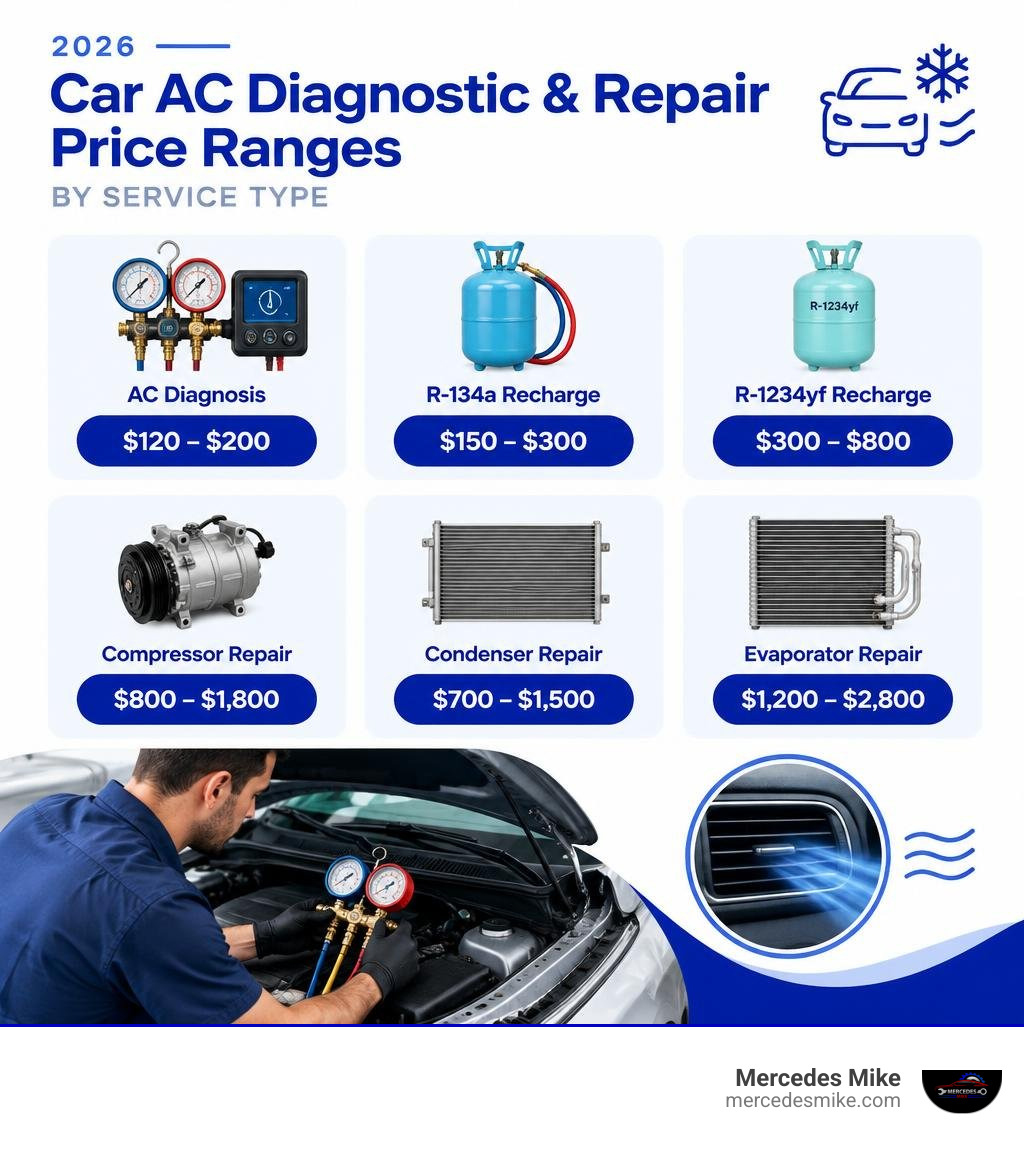
In 2026, expect to pay $120-$200 for an AC diagnosis and about $150-$300 for an R-134a recharge. A newer R-1234yf system may cost $300-$800 to recharge. If a part has failed, typical repairs run $800-$1,800 for a compressor, $700-$1,500 for a condenser, or $1,200-$2,800 for an evaporator. German luxury cars can cost more, especially when parts are hard to reach.
A recharge alone will not fix a leak. Ask for a diagnosis and a written estimate before approving work. I'm Mike Ibrahim, and I'll help you see which costs are fair and which questions to ask.
Typical Auto AC Service Price Breakdown in 2026
Navigating auto repair estimates can occasionally feel like learning a second language, but climate control pricing generally follows standard industry parameters. When your vents begin blowing lukewarm air during a sweltering South Florida afternoon in Pompano Beach or Deerfield Beach, the total bill depends on whether you need a minor adjustment, fresh fluid, or extensive hardware replacement.
Knowing the expected auto ac service price ahead of time prevents surprise charges on your final invoice. Every professional repair begins with a structured diagnostic evaluation. From there, your technician identifies whether you are facing a simple pressure drop or structural damage across key components.
Service / Component Replacement | Economy / Mid-Range Vehicle | Luxury European Vehicle (Mercedes, BMW, Audi, Porsche) | Common Labor Time |
|---|---|---|---|
Comprehensive Diagnostic Inspection | $120 – $200 | $150 – $250 | 1.0 – 1.5 Hours |
R-134a Refrigerant Evac & Recharge | $150 – $300 | $200 – $350 | 1.0 – 1.5 Hours |
R-1234yf Refrigerant Evac & Recharge | $300 – $800 | $350 – $850 | 1.0 – 2.0 Hours |
AC Compressor Replacement | $800 – $1,800 | $1,500 – $3,500 | 2.5 – 4.5 Hours |
AC Condenser Replacement | $700 – $1,500 | $900 – $2,200 | 2.0 – 4.0 Hours |
AC Evaporator Core Replacement | $1,200 – $2,800 | $2,500 – $5,000 | 6.0 – 10.0+ Hours |
Blend Door Actuator Replacement | $250 – $500 | $350 – $750 | 1.5 – 3.0 Hours |
These ranges reflect industry standards outlined in comprehensive car air conditioning repair cost benchmarks. The wide gap between economy and luxury European vehicles comes down to tightly packaged engine bays, specialized electronic controls, and high-precision replacement hardware.
Diagnostic Inspection and Refrigerant Recharge Costs
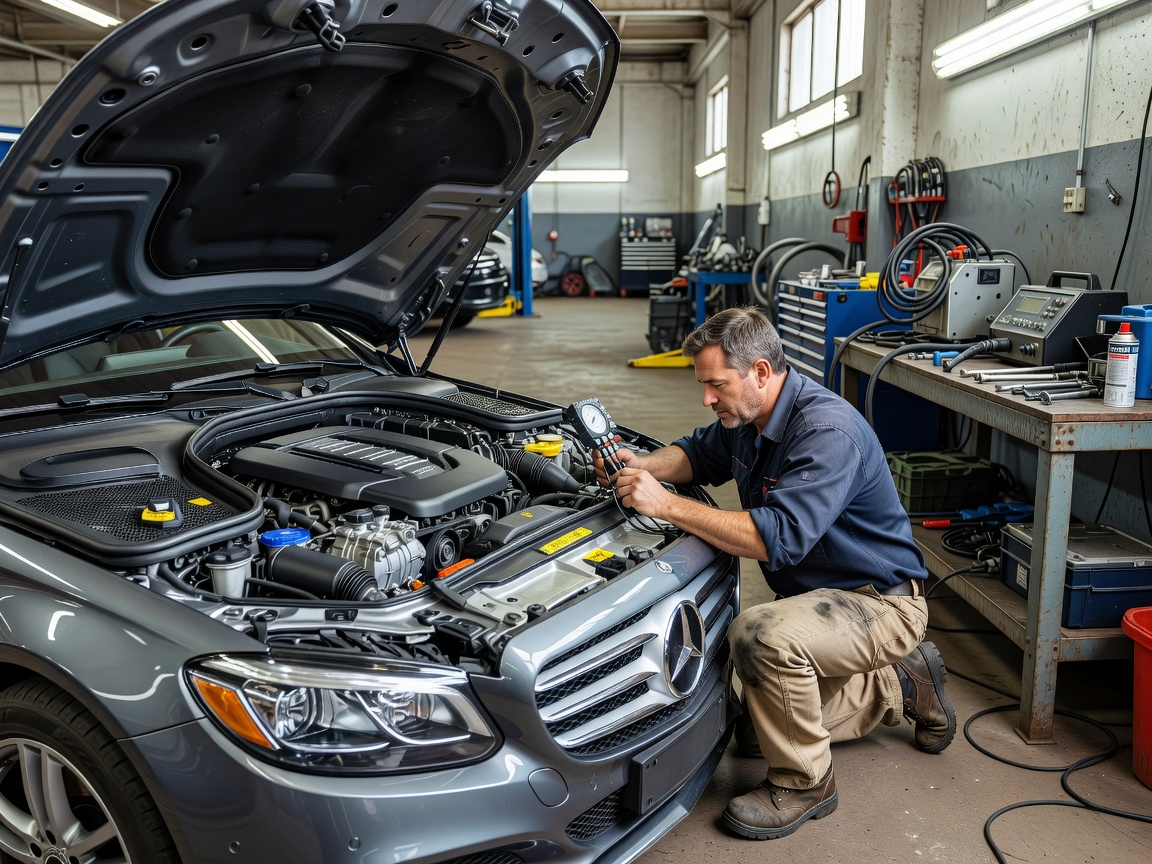
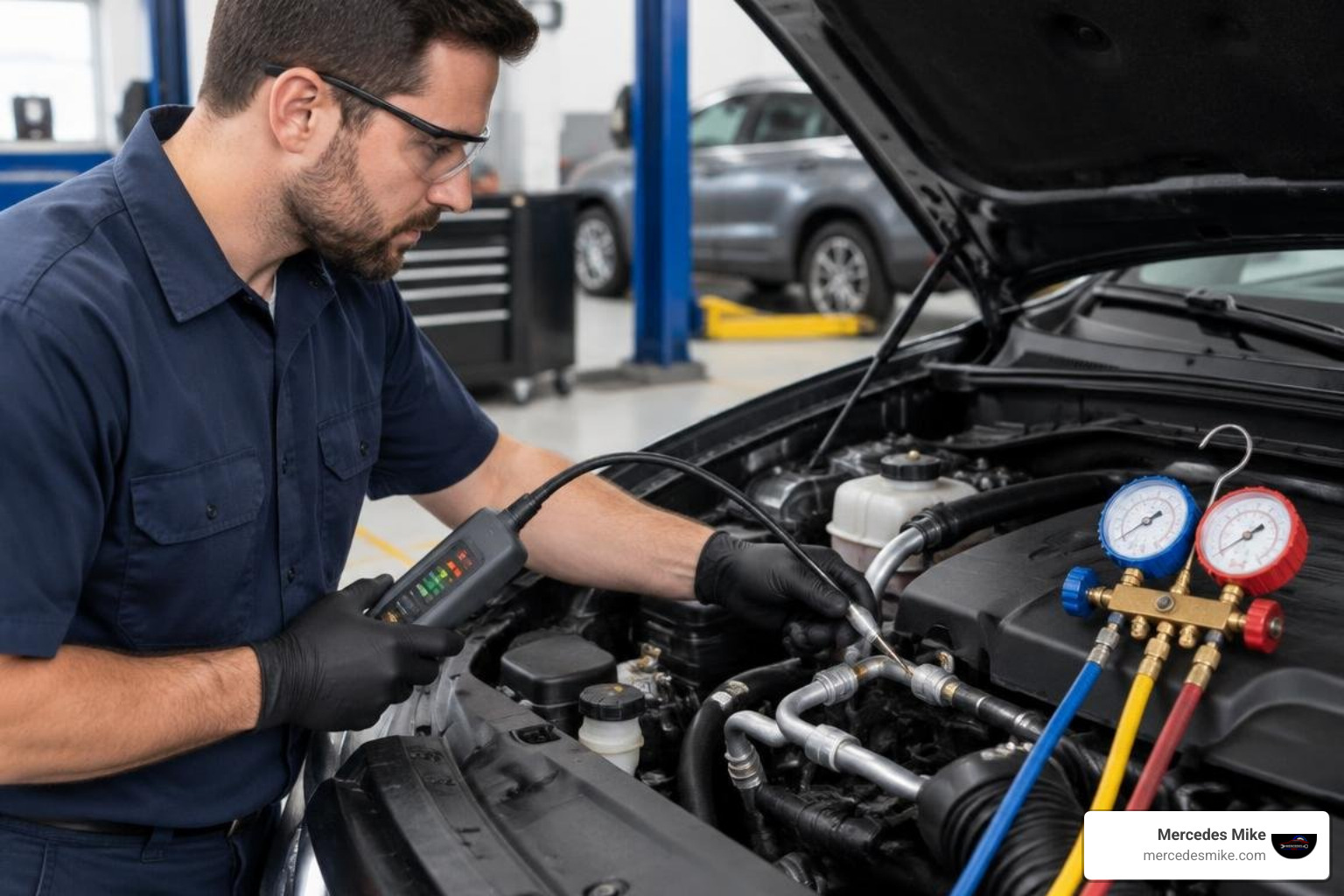
A proper air conditioning check involves far more than simply sticking a thermometer into a dashboard vent. A professional diagnostic visit typically runs between $120 and $200. During this service, our technicians connect digital manifold gauges to monitor both high-pressure and low-pressure lines, test cooling fan engagement, evaluate cabin airflow, and scan onboard control modules for trouble codes.
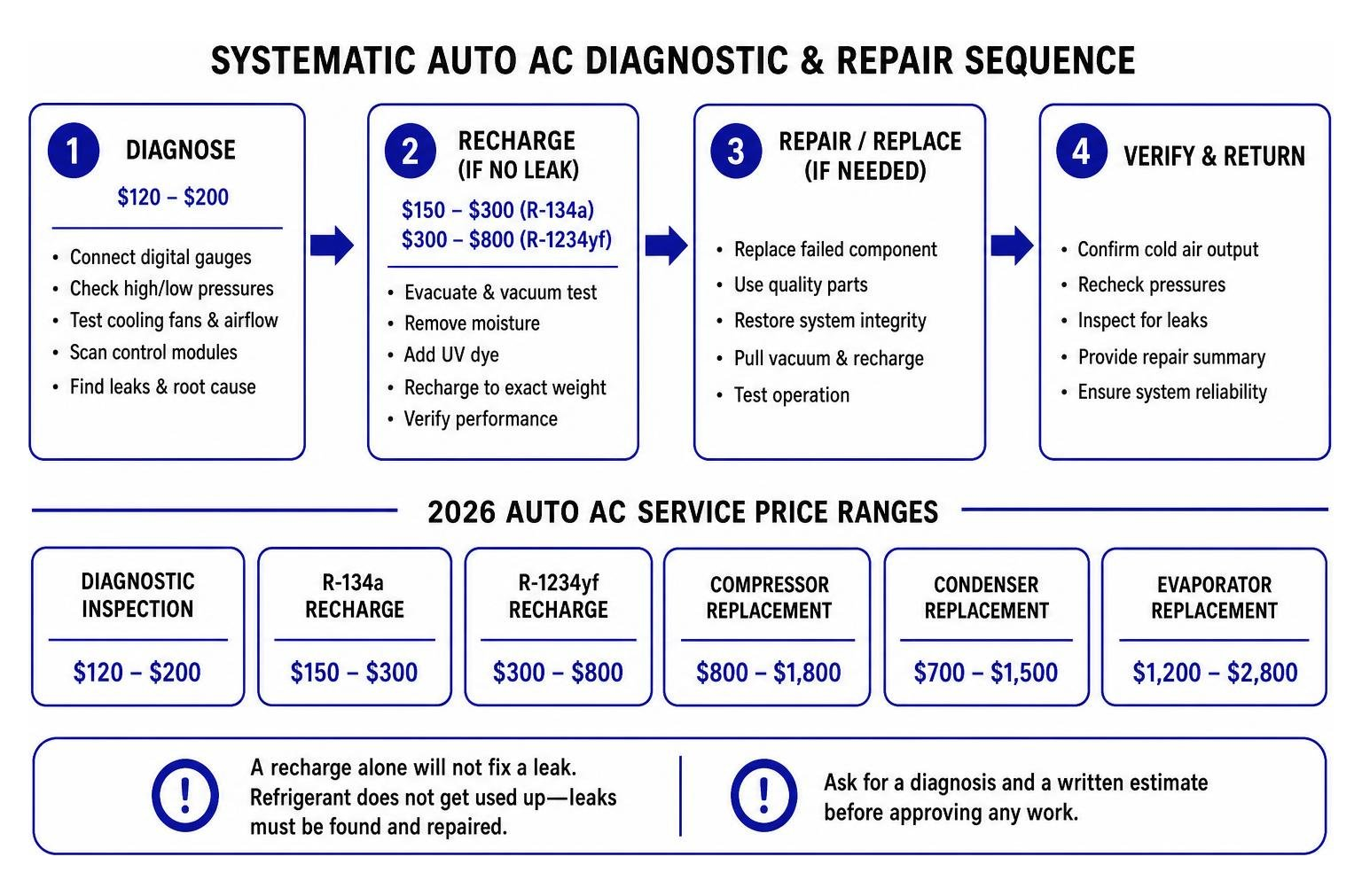
If the system is low on gas, simply pumping in more fluid without finding the root cause is a temporary band-aid. Refrigerant does not evaporate or get consumed during normal operation; it only drops if a leak develops. A complete service requires an air conditioning recharge that includes a deep vacuum decay test.
By pulling a vacuum on the empty system for 30 to 45 minutes, we boil off internal moisture that creates corrosive acids. We then inject fluorescent UV leak detection dye alongside fresh refrigerant charged to exact manufacturer weight tolerances. Investing in regular evaluations keeps the overall cost of AC maintenance low by resolving minor seal leaks before they starve expensive mechanical components of vital lubrication.
Major Component Repairs: Compressors, Condensers, and Evaporators
When mechanical components suffer physical wear or internal failure, costs rise beyond simple maintenance.
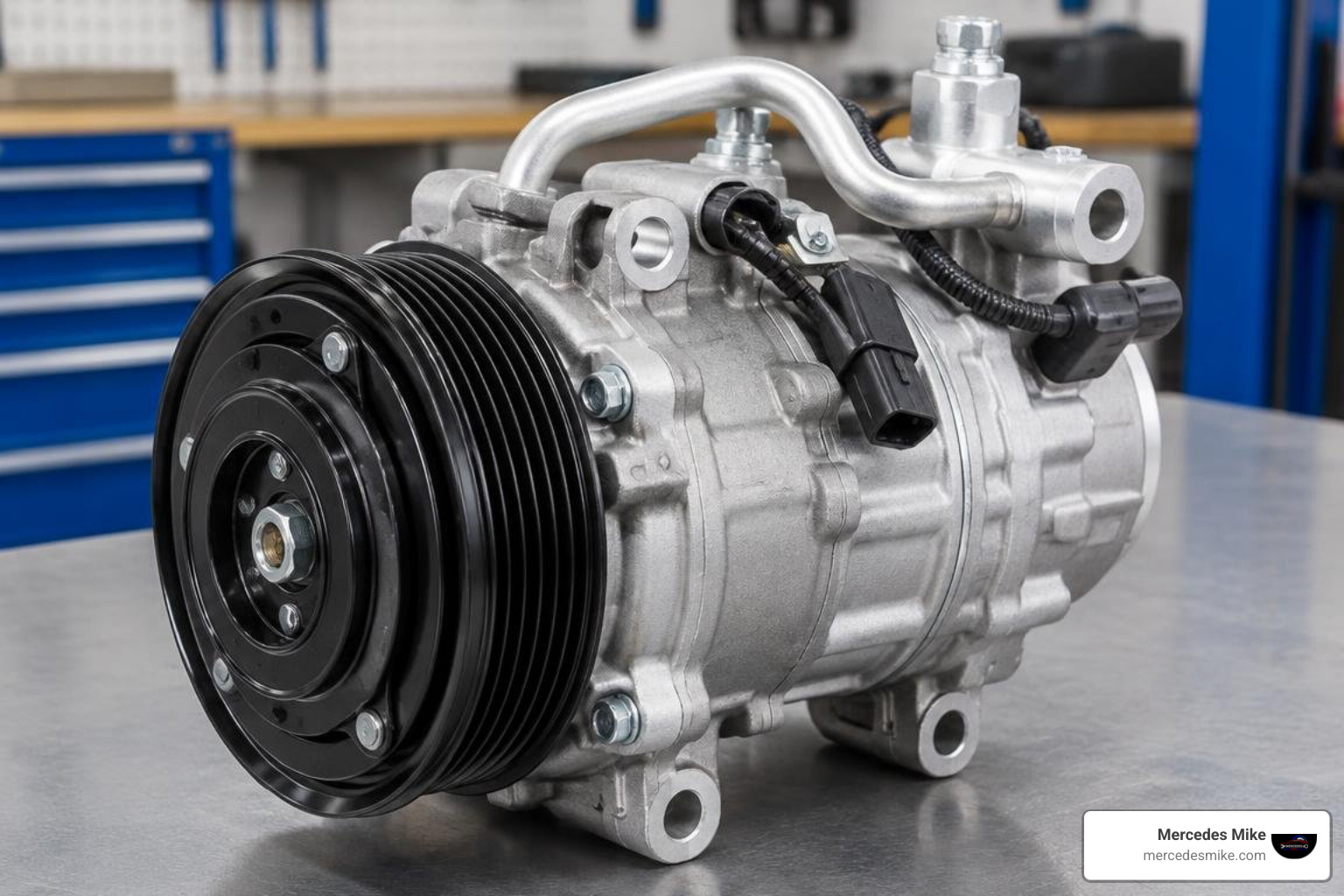
The AC Compressor: As the heart of your vehicle's climate control system, the compressor pressurizes refrigerant vapor and circulates specialized PAG or POE oil throughout the lines. If internal bearings seize or the electromagnetic clutch fails, calculating the cost to fix AC compressor assemblies usually lands between $800 and $1,800 on standard vehicles, and between $1,500 and $3,500 on luxury European models. When an old compressor experiences catastrophic failure, it sheds microscopic metal shavings throughout the lines, requiring a system flush, a new receiver-dryer, and a replacement expansion valve to safeguard your new unit.
The AC Condenser: Positioned directly in front of your vehicle's radiator behind the front bumper, the condenser functions as a heat exchanger. Because of its exposed forward location, it frequently suffers damage from road gravel, debris, or minor front-end bumps. A dedicated AC condenser repair or full replacement typically costs $700 to $1,500 on domestic models, and up to $2,200 on performance European imports due to complex front-fascia disassembly.
The AC Evaporator Core: Tucked deep behind your dashboard, the evaporator absorbs cabin heat as cold low-pressure liquid transitions into gas. When aluminum evaporator coils corrode and leak, fixing them requires entirely removing the steering column, dashboard structure, wiring harnesses, and center console. While the replacement evaporator core itself may cost only $200 to $500, the 8 to 12 hours of specialized interior labor pushes total evaporator repairs to between $1,200 and $2,800 on standard cars, and $2,500 to $5,000 on high-end European sedans and SUVs.
Key Factors Influencing What You Pay for Car Climate Control
Your final repair invoice reflects several moving variables rather than a static parts catalog price. Regional market rates, vehicle complexity, shop tooling investments, and environmental compliance all shape the bottom line, as detailed in the Auto Air Conditioning Service Cost Guide 2026.
Understanding these elements gives you full visibility into what drives your bill:
Labor Rates and Geographic Demand: Technician wages and shop operating expenses vary considerably across regions. Dense coastal markets feature higher base labor rates compared to rural areas. Specialized facilities equipped with dedicated scan equipment and master technicians adjust their labor rates to reflect their tooling and training investments.
Environmental Handling & Disposal Fees: The EPA mandates strict recovery procedures for automotive refrigerants under Section 608 and Section 609 clean air standards. Shops charge modest line items (typically $15 to $40) to cover dedicated recycling equipment, hazardous material containment, and cylinder maintenance.
Shop Supplies and Hardware: Gaskets, high-temperature O-rings, PAG compressor lubricants, Schrader service valves, and system flushes represent minor items that ensure the primary repair holds up over thousands of operating miles.
Refrigerant Type: R-134a vs. R-1234yf Cost Differences
One of the largest drivers of recharge cost variation is the specific chemical running through your car's climate control loop.
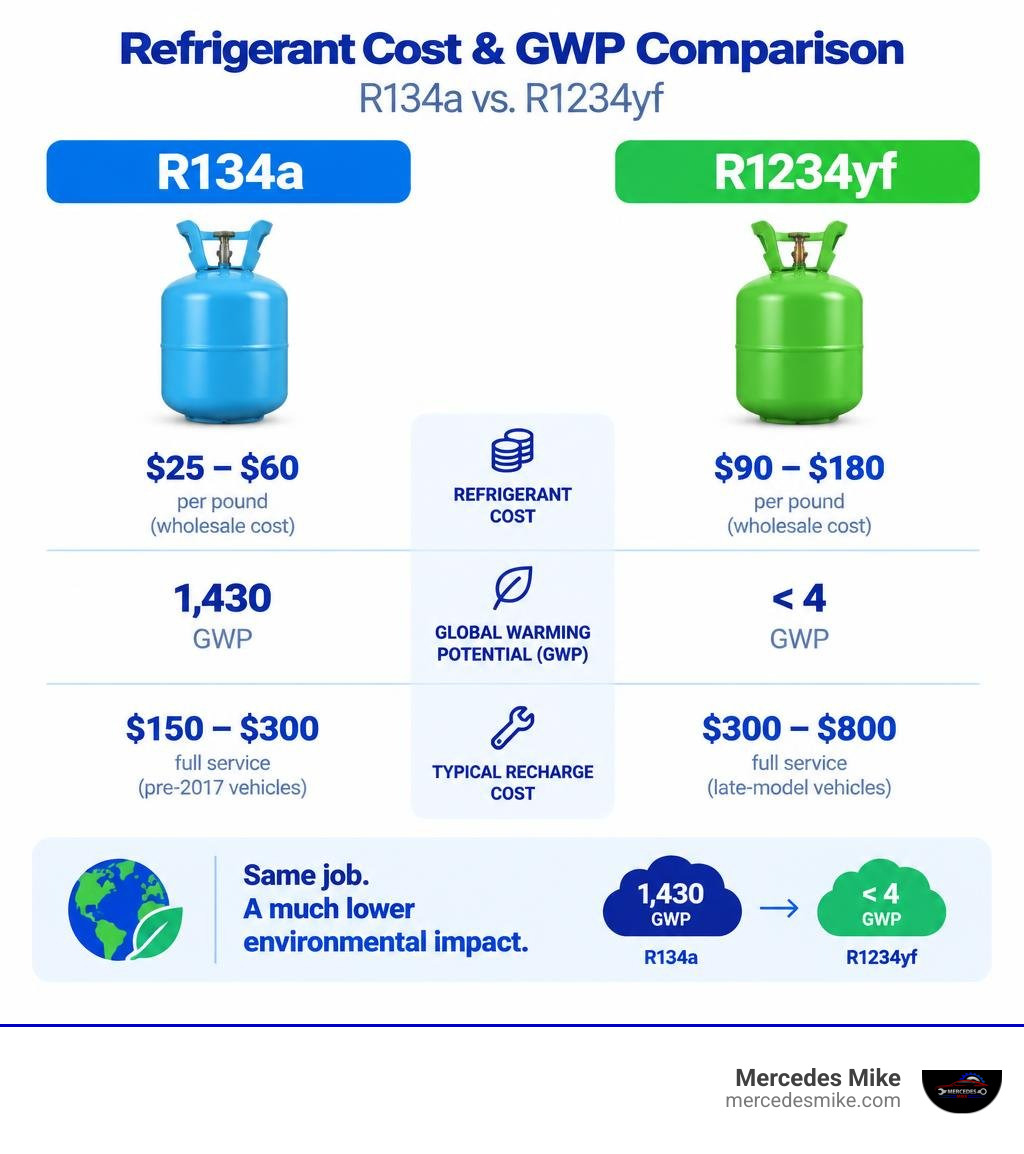
For decades, R-134a served as the standard automotive refrigerant. It remains reliable and affordable, with wholesale costs hovering around $25 to $60 per pound. A complete R-134a service for pre-2017 vehicles typically costs between $150 and $300 at an independent repair shop.
In contrast, modern environmental regulations have phased in R-1234yf across newer vehicle platforms. While R-134a has a high Global Warming Potential (GWP) of 1,430, newer R-1234yf boasts a GWP rating of under 4—an environmental improvement of more than 99%. However, synthesizing this newer hydrofluoroolefin chemical is far more complex, driving wholesale prices to $90 to $180 per pound.
Additionally, servicing R-1234yf requires dedicated recovery machines with integrated refrigerant purity analyzers to prevent cross-contamination. Performing a proper German auto AC recharge on a late-model vehicle using R-1234yf naturally ranges from $300 to $800 depending on total system capacity.
Factors That Influence Your Final Auto AC Service Price
Beyond refrigerant formulas, vehicle architecture plays a massive role in repair complexity. Precision German engineering delivers exceptional handling, quiet cabin acoustics, and dynamic performance, but it also features tightly integrated under-hood packaging.
For instance, scheduling a BMW air conditioning recharge or tackling an Audi Q5 AC repair often involves removing structural subframes, wheel arch liners, or intake ducting simply to access service ports, belt tensioners, and high-pressure sensors.
Furthermore, modern luxury vehicles frequently feature dual-zone or quad-zone automatic climate control systems. These configurations utilize independent rear evaporator cores, complex secondary expansion valves, and supplementary plumbing runs beneath the chassis. When a leak occurs, performing a targeted refrigerant leak repair requires tracing extensive lines with electronic halogen sniffers and high-output UV lamps to pinpoint microscopic fissures along aluminum unions and rubber hoses.
Professional Service and Long-Term Value Decisions
When facing a substantial estimate on an older car, drivers often wonder whether they should repair the climate system or live with open windows. In warm coastal environments, functional air conditioning is not merely a convenience—it is a critical safety feature that keeps windows defogged during heavy rains and protects occupants from extreme interior heat.
A practical benchmark used by automotive professionals is the 15-percent repair-to-value rule. If a comprehensive AC repair costs less than 15% of your vehicle's fair market value, completing the repair makes solid financial sense.
If the repair estimate reaches 25% to 30% of the car's private-party resale value, weigh the repair against ongoing maintenance costs. However, driving a car with a completely disabled climate control system immediately reduces its trade-in or private resale value by $1,000 to $2,500, often exceeding the cost of the repair itself.
Risks of Attempting Auto AC Repairs Without Professional Equipment
The shelves of local auto parts stores are filled with DIY recharge cans containing built-in pressure gauges. While spending $40 to $80 on a quick-fix can seems tempting, it introduces severe mechanical risks to your car's climate loop:
Blind Pressure Guesswork: DIY cans only measure low-side pressure without monitoring high-side operating dynamics. Low pressure can be caused by a faulty expansion valve or an airflow restriction rather than low fluid. Adding refrigerant to an already full system spikes high-side pressures, potentially bursting lines or cracking the compressor casing.
Harmful Chemical Sealants: Most DIY cans contain chemical stop-leak additives designed to swell rubber seals. When exposed to internal moisture or modern compressor internals, these sealants gel, clogging expansion valves, plugging fine condenser micro-tubes, and ruining commercial recovery machines.
No Vacuum Moisture Removal: Simply adding gas does not purge ambient air and moisture trapped inside a leaking system. Moisture mixes with compressor oil to produce hydrofluoric and hydrochloric acids, causing premature bearing failure from the inside out.
Incorrect Charge Weights: Modern vehicles use tightly calibrated charges specified down to the exact gram. DIY cans cannot accurately meter refrigerant by weight, resulting in poor cooling performance and elevated fuel consumption.
When to Repair vs. Replace an Aging Vehicle AC System
If your vehicle is mechanically sound and reliable, repairing the AC system is almost always more economical than taking on a new car payment. A targeted repair—such as rebuilding damaged hoses, installing a new compressor, or addressing an interior AC vent repair to fix stuck blend-door actuators—restores ice-cold cabin comfort for years to come.
Conversely, if an older vehicle has severe engine wear, structural corrosion, and an electrical system failure alongside an evaporator core leak, those combined expenses may indicate it is time to move on to a newer vehicle.
Frequently Asked Questions About Auto AC Services
How often should a car AC system be inspected or serviced?
We recommend having your car's air conditioning system performance-tested every two years. This inspection should include measuring vent discharge temperatures, testing cooling fan speeds, verifying refrigerant pressure balances, and inspecting the cabin air filter.
Replacing your cabin air filter every 12,000 to 15,000 miles maintains proper airflow across the evaporator and prevents mildew buildup. Running your AC system for 10 minutes once a week—even during cooler months—also circulates oil throughout the internal loop to keep rubber O-rings and shaft seals lubricated.
Why does my car AC blow cold while driving but warm at idle?
If your car blows cold air at highway speeds but warms up at stoplights, the issue typically points to insufficient airflow across the front condenser or low refrigerant volume.
At highway speeds, incoming air naturally cools the condenser. At idle, the system relies entirely on the electric radiator/condenser cooling fan. If that fan motor is weak, or if dirt and debris have clogged the condenser fins, high-side pressures skyrocket and cooling drops. A slipping compressor clutch or slightly low refrigerant charge can also produce this symptom.
What kind of warranty should come with a professional AC repair?
A reputable automotive repair shop should back their air conditioning work with a clear parts-and-labor warranty. For major repairs such as compressor, condenser, or evaporator replacements, look for coverage extending 24 to 36 months or 24,000 to 36,000 miles. A solid warranty reflects high-grade replacement parts, clean refrigerant handling, and thorough leak validation.
Conclusion and Next Steps
Understanding your car's climate control system ensures you receive fair, transparent pricing when service is needed. Whether you require a basic vacuum-and-recharge or an extensive component overhaul, receiving a thorough diagnostic assessment and a written estimate protects your investment.
At Mercedes Mike, our certified technicians bring decades of dedicated experience to servicing high-performance German vehicles—including Mercedes-Benz, BMW, Audi, and Porsche—alongside all modern makes and models across South Florida. From our facility on N Dixie Hwy (882 NE 41st Court) serving Pompano Beach and Deerfield Beach, FL, we use digital diagnostic tools and dedicated recovery equipment to ensure repairs meet factory standards.
If your air conditioning is hissing, blowing warm air, or struggling in traffic, explore our complete car AC repair cost guide or schedule an inspection with our team today to keep your cabin cool and comfortable all year long.