Beginner's Guide to ECU Tuning: Learn How to Tune
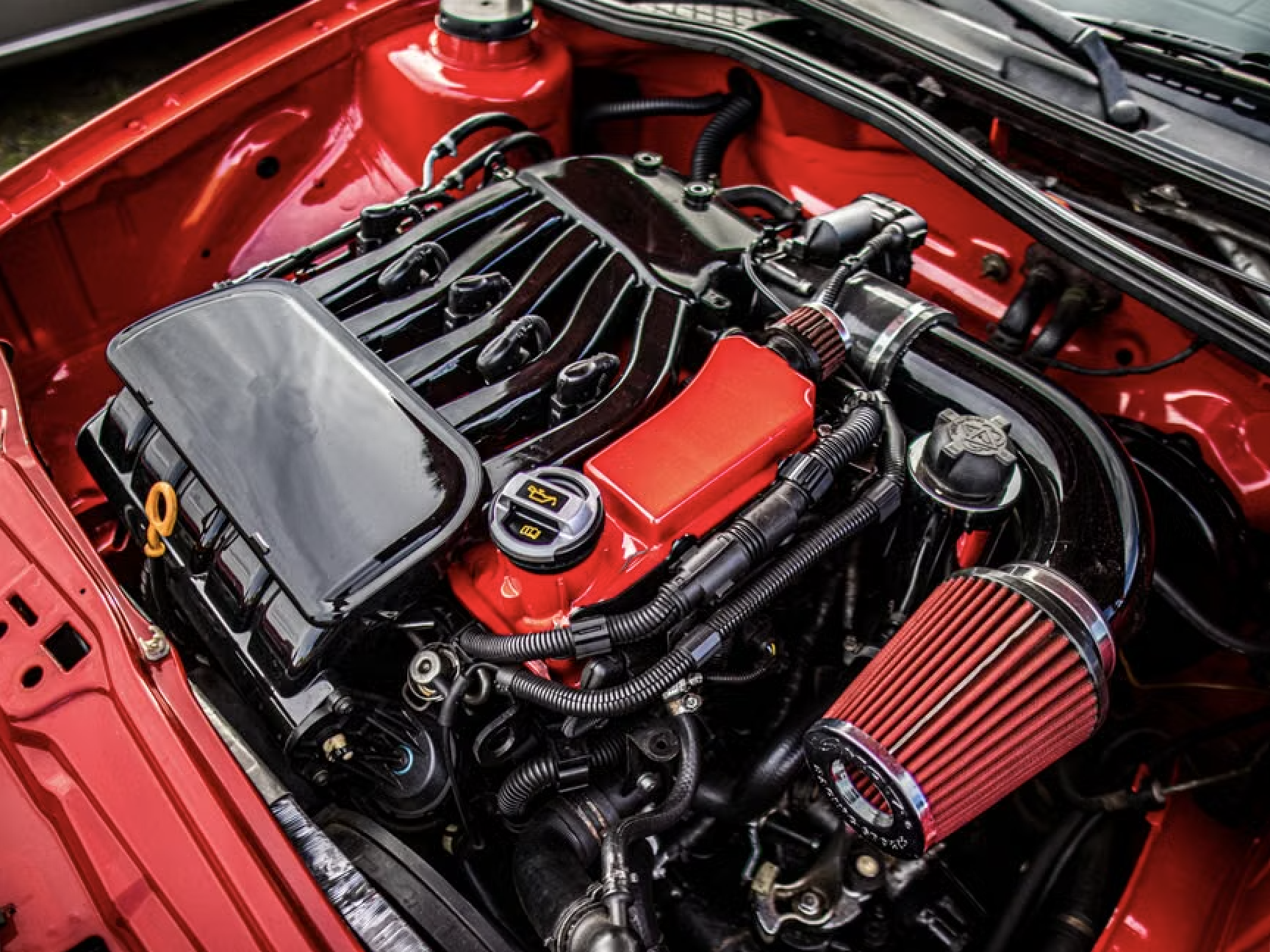
ECU Tuning: A Smarter Way to Change How Your Engine Performs
ECU tuning changes the software settings inside your car's engine control unit (ECU). A well-matched tune can improve power, torque, throttle response, or drivability by adjusting values such as fuel delivery, ignition timing, and turbo boost targets. The practice is closely related to the broader field of engine tuning, which covers both mechanical and software-based performance optimization.
For a safe result, start with these basics:
Make sure the vehicle is healthy and up to date on maintenance.
Save the original ECU read before any changes are made.
Choose a tune that matches your car's hardware and intended use.
Verify the file checksum and flash it with the correct tool and protocol.
Test and monitor the vehicle after flashing, especially on turbocharged German cars.
A conservative Stage 1 tune usually needs no hardware changes. Depending on the engine, it may add roughly 20-60 HP and 60-130 Nm of torque. Bigger gains can require supporting parts, custom calibration, and data logging.
ECU tuning is not a shortcut around mechanical problems. It is software calibration, so it works best when the engine, transmission, cooling system, and electrical system are already in good condition. It can also affect manufacturer warranty coverage and may not be legal for road use when it alters emissions-related systems.
I'm Mike Ibrahim, and in this guide I'll help you understand what ECU tuning changes, how to choose the right approach, and where caution matters most.
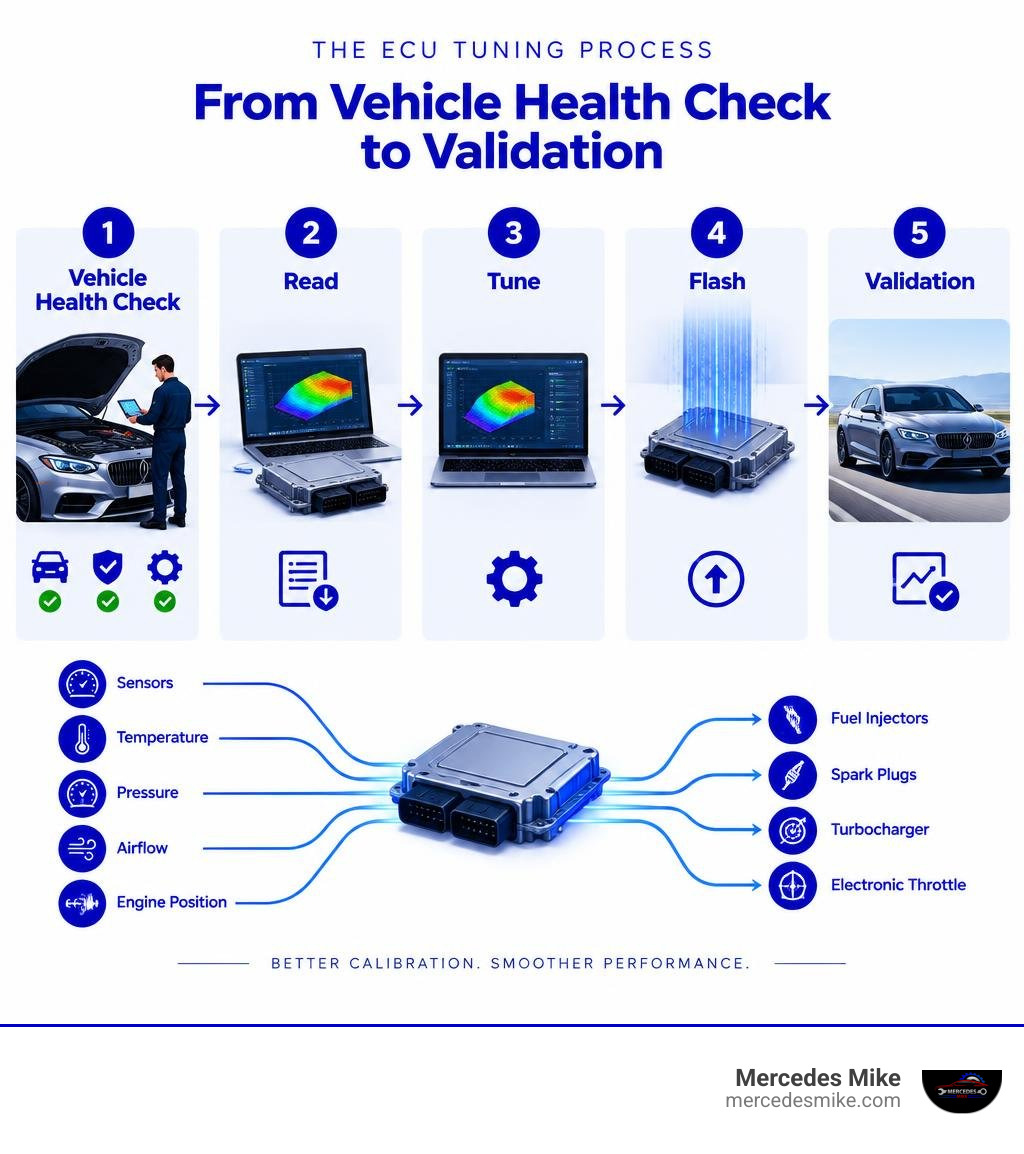
Fundamentals of ECU Tuning: How Engine Management Works
Every modern vehicle relies on an Engine Control Unit (ECU) or Engine Control Module (ECM) as its central brain. Think of the ECU as an onboard computer that constantly processes thousands of calculations per second. It reads data from a complex network of engine sensors—including mass airflow (MAF), manifold absolute pressure (MAP), oxygen (Lambda) sensors, intake air temperatures, coolant temperatures, and crank position sensors.
The ECU takes these real-time inputs, cross-references internal multidimensional 2D and 3D lookup tables, and issues precise commands to your engine actuators. It governs when and how long fuel injectors open, the exact millisecond spark plugs ignite, how aggressively the turbocharger builds pressure, and how far the electronic throttle body opens. Factory calibrations are intentionally conservative because auto manufacturers must account for low-quality fuel, extreme temperature swings, neglected maintenance routines, and strict global fleet emissions mandates.
When we recalibrate these tables, we optimize the engine's volumetric efficiency—the ratio of the mass of air-fuel mixture drawn into the cylinder relative to its theoretical capacity. By refining target air-fuel ratios (AFR), advancing ignition timing closer to the engine's mean best torque (MBT) without knock, and managing long-term and short-term fuel trim behavior, engine management delivers noticeable power gains without compromising everyday drivability.
Core Parameters Adjusted in Engine Remapping
Modern engine calibration is a delicate balance of interdependent maps. Adjusting one parameter in isolation inevitably affects downstream variables. During a professional car ECU remapping session, tuners modify several primary map clusters:
Target Boost Pressure & Wastegate Duty Cycle: In forced-induction vehicles, raising boost limits safely across the mid-to-high RPM range yields immediate torque output.
Fuel Injection Timing & Duration: Recalibrating injector pulse widths, fuel rail pressure thresholds, and injection window angles ensures cylinder charges maintain optimal AFR throughout the rev range.
Ignition Timing Advance: Advancing spark timing allows the flame front to create maximum cylinder pressure right after top dead center (TDC), significantly enhancing responsiveness.
Variable Valve Timing (VVT) & Lift: Optimizing camshaft phasing enhances cylinder filling at specific RPM bands and reduces pumping losses.
Electronic Throttle Control: Smoothing drive-by-wire pedal curves eliminates artificial factory dead zones for sharper throttle pickup.
Speed Limiters & Rev Limiters: Removing restrictive factory top-speed limits (VMAX) and adjusting safe RPM cutoffs.
Step-by-Step ECU Tuning Workflow from Read to Flash
Calibrating an engine management system follows a strict, repeatable engineering sequence to ensure software integrity and engine safety.
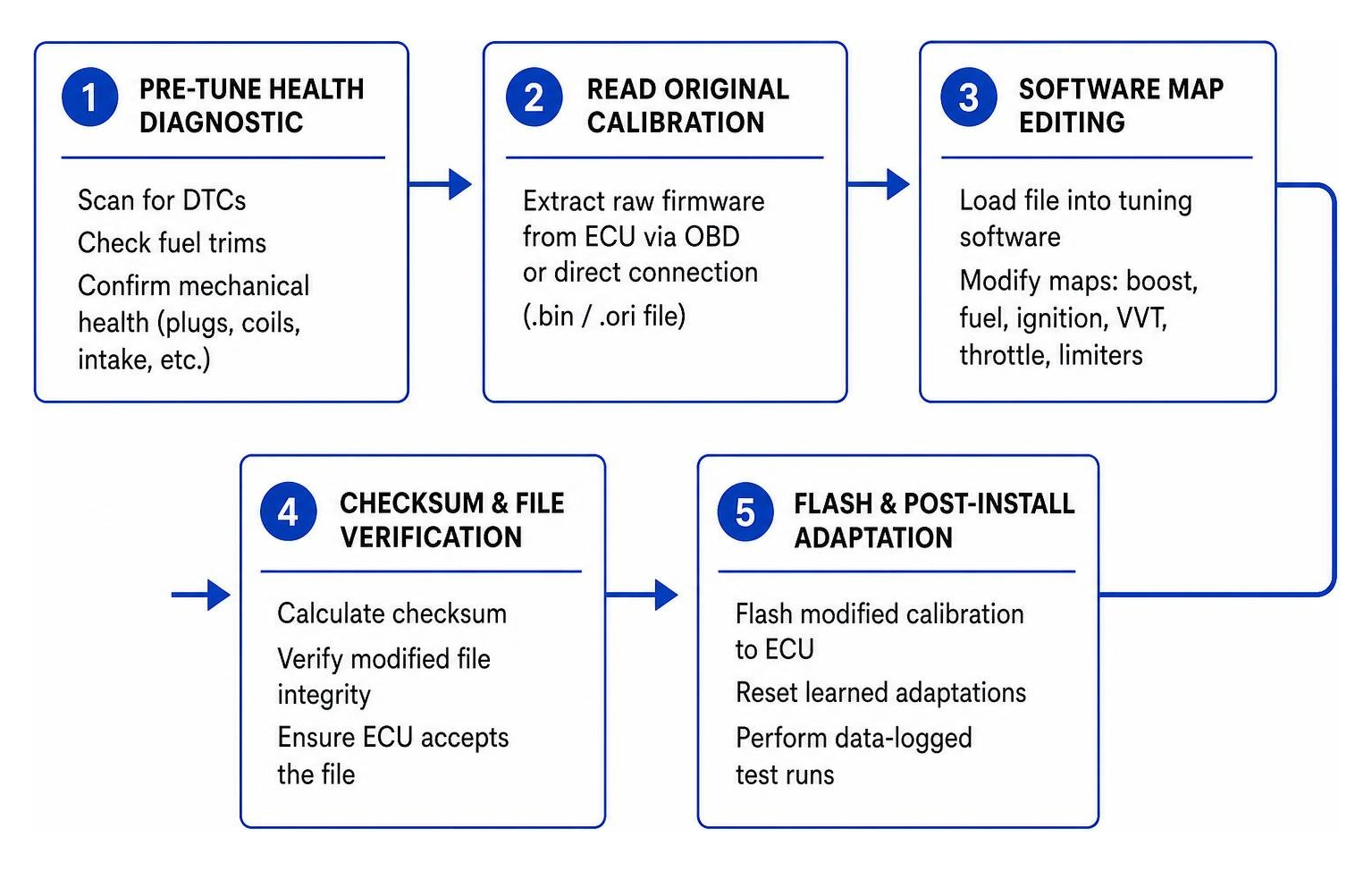
Pre-Tune Health Diagnostic: Scanning the vehicle for pending diagnostic trouble codes (DTCs), checking fuel trims, and confirming the mechanical health of spark plugs, coils, and intake pathways.
Reading the Original Calibration: Extracting the raw firmware data (often in
.binor.oriformat) using professional diagnostic hardware via the diagnostic port or direct module connection.Software Map Editing: Loading the binary file into calibration suites to modify targeted maps, injection timing, boost targets, and limiter values.
Checksum Calculation & File Verification: Running a mathematical verification pass over modified hex blocks to ensure the vehicle processor accepts the file without bricking.
Flashing & Post-Install Adaptation: Writing the modified calibration file back to the onboard flash memory, resetting learned fuel/throttle adaptations, and performing data-logged test runs.
Understanding Calibration Stages and Power Gains
Tuning packages are traditionally broken down into distinct "Stages." These tiers categorize software aggressiveness relative to the supporting mechanical modifications installed on the vehicle.
Tuning Tier | Required Hardware | Typical Power Increase | Typical Torque Gain | Target Application |
|---|---|---|---|---|
Stage 1 | 100% Stock Components | +20 to 60 HP | +60 to 130 Nm | Daily drivability & safe highway overtaking |
Stage 2 | High-flow downpipes, intake, intercooler | +50 to 100+ HP | +120 to 200+ Nm | Sport driving, track days, high-rpm breathing |
Stage 3 | Upgraded turbocharger/supercharger, fueling | +100 to 300+ HP | +200 to 400+ Nm | Maximum motorsport and competition builds |
Stage 1 calibrations are engineered to work safely within the factory tolerance margins of stock hardware. Stage 2 configurations unlock deeper reserves by removing thermal and flow bottlenecks—such as installing free-flowing downpipes and larger charge-air coolers. Stage 3 calibrations require custom setup strategies built around major mechanical performance upgrades.
Selecting the Right ECU Tuning Stage for Hardware Upgrades
Choosing the correct calibration stage depends directly on your installed hardware, regional climate, and primary driving goals. If your powertrain retains its factory catalytic converters, standard charge-air intercooler, and factory airbox, running an aggressive Stage 2 calibration will cause excessive exhaust gas temperatures (EGT) and force the ECU to pull ignition timing to protect the engine.
For European performance platforms, balancing hardware airflow with software calibration is vital. When calibrating high-output platforms like the M177/M178 biturbo V8s, pairing high-flow downpipes with an AMG GT turbo upgrade demands individualized dyno mapping to control low-end cylinder pressures and maintain fuel delivery across broad RPM bands. Comprehensive Mercedes tuning balances forced-induction boost delivery against transmission torque handling limits to ensure smooth power transfer.
Automated File Solutions vs. Custom Master Tuner Calibrations
Modern tuning workflows utilize two main approaches for file development: automated cloud-based processing and manual master tuner calibration.
Online automated file portals can apply preset calibration algorithms with a build time under 30 seconds, maintaining a 99.9% success rate across standard configurations. These automated services are helpful for quick standard Stage 1 files and routine diagnostic adaptations.
However, customized builds benefit heavily from a dedicated master tuner. Master tuners review live engine data logs, account for local fuel octane, compensate for high ambient heat, and fine-tune delivery curves on a rolling road dyno. This human oversight ensures that non-standard bolt-on parts, transmission shift behaviors, and unique driving conditions are dialed in safely.
Essential Hardware, Flashing Protocols, and Supported Controllers
Modifying modern engine control units requires professional hardware interfaces capable of communicating across 31 brand groups and more than 273 ECU types. Industry-standard ECUs encompass major automotive controller families manufactured by Bosch, Continental, Siemens, Delphi, Denso, Magneti Marelli, Hitachi, and Mitsubishi.
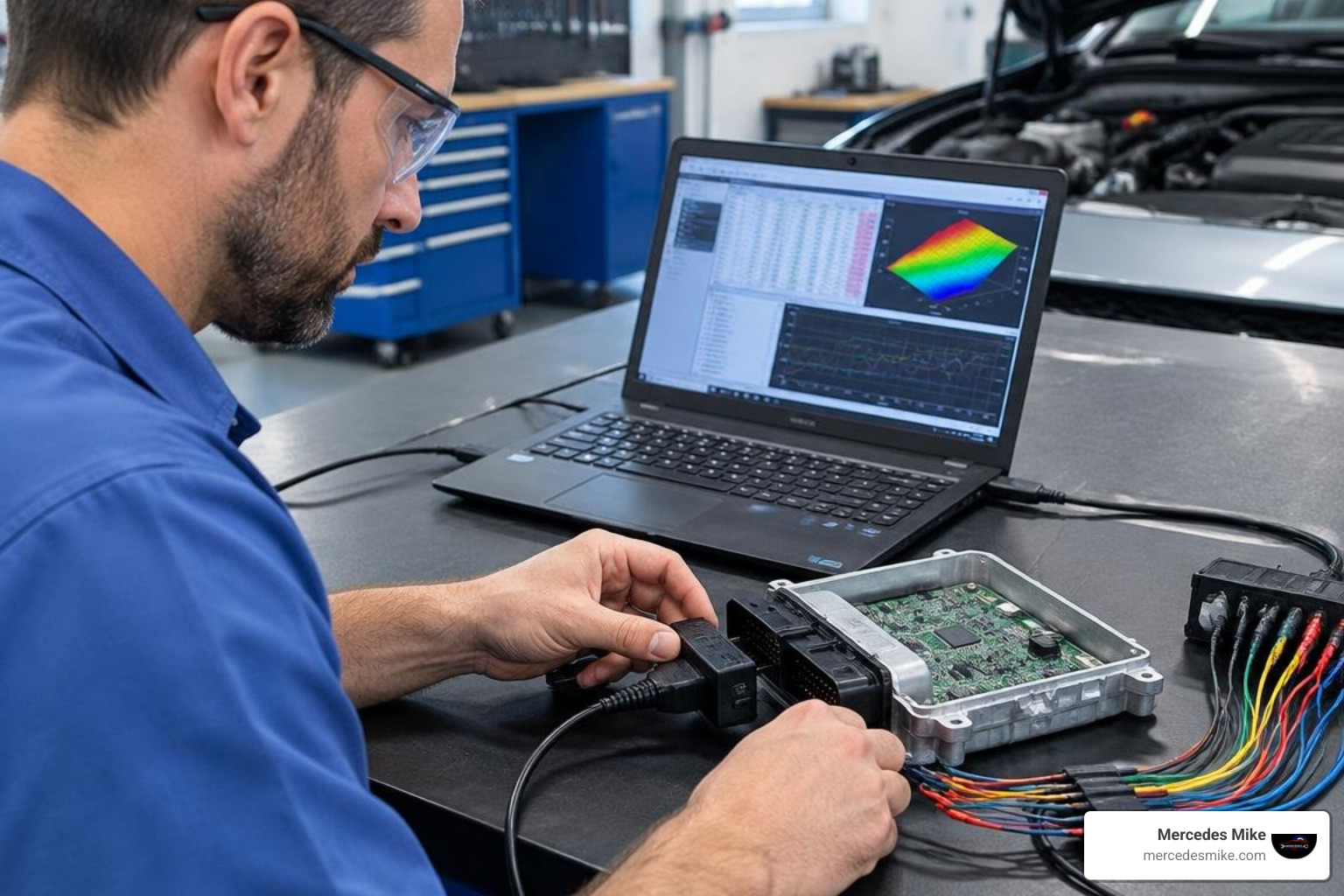
Modern engine management includes microcontrollers such as the Bosch EDC17 and MED17 families, as well as the advanced MD1 and MG1 series equipped with Infineon Tricore and Aurix microprocessors. Working with experienced ECM tuners near me ensures the proper communication protocol is used for your vehicle's specific electronic control architecture.
Flashing Interfaces and Read Methods
Depending on the age, processor generation, and manufacturer anti-tuning security patches applied to the module, recalibration is executed through one of three primary physical connection methods:
OBD-II Port Flashing: The most straightforward method. Data reads and writes occur directly through the standard cabin diagnostic port via CAN bus or K-Line protocols without removing physical components.
Bench Mode: The ECU is removed from the engine bay and connected to interface hardware on a workstation using dedicated pinout breakout harnesses. This method bypasses vehicle gateway firewalls without physically opening the ECU casing.
Bootloader & BDM/JTAG: For deeper controller access or unbricking corrupted memory, the ECU casing is opened, and specialized probes interface directly with boot pads on the printed circuit board.
When local drivers look for remapping near me, our Pompano Beach facility provides full diagnostic bench and OBD flashing support across all major German marques.
Standalone Management and Custom Scripting
For full-fledged track builds, standalone engine management systems like MaxxECU provide ground-up engine control. Equipped with high-speed ARM Cortex processors, standalone systems deliver real-time calculations with virtually zero latency.
These advanced platforms feature built-in Lua scripting engines that allow tuners to program custom logic tables, map virtual sensor arrays, and integrate with complex OEM CAN bus streams. Standalone setups easily handle sophisticated operations like multi-strategy launch control, anti-lag, boost-by-gear, nitrous staging, and transmission control integration across more than 20 automatic transmission types.
Custom Software Features and Emission Management
Beyond basic horsepower and torque adjustments, ECU calibration software allows enthusiasts to configure specialized behavioral features:
Launch Control & Anti-Lag: Sets a stationary RPM limiter while building boost off the line for consistent acceleration.
Pop & Bang / Exhaust Crackle: Retards ignition timing on throttle overrun while maintaining minor fuel cut delays, creating sporty exhaust pops.
Dynamic Rev Limiters: Implements variable redlines that protect cold oil during warm-up periods before unlocking full RPM range at operating temperature.
File Format Conversions & Adjustments: Software tools provide conversions like CUW to BIN for editing Japanese manufacturer files, alongside vehicle identification number (VIN) adaptation.
Exhaust and Emission System Modifications
Specialized software configurations can adjust parameters for off-highway vehicles and track applications. Calibrations can manage diagnostic trouble code (DTC) error masking, exhaust gas recirculation (EGR) valve positioning, diesel particulate filter (DPF) regeneration cycles, and Selective Catalytic Reduction (AdBlue/DEF) metering systems.
For commercial diesel platforms, diesel ECM tuning optimizes low-end torque delivery and fuel efficiency for hauling. Similarly, targeted remapping on platforms like the Mercedes OM642 engine via a C350 CDI remap improves mid-range pulling power and throttle response.
Note: Altering or disabling emissions control equipment on road-going passenger vehicles violates federal and local clean air regulations. These configurations are strictly reserved for sanctioned motorsport and off-highway applications.
Engine Safety, Reliability, and Risk Prevention
ECU tuning is safe when applied to a mechanically sound vehicle using proven calibration limits. However, aggressive or poorly calibrated software introduces real risks if safety thresholds are compromised.
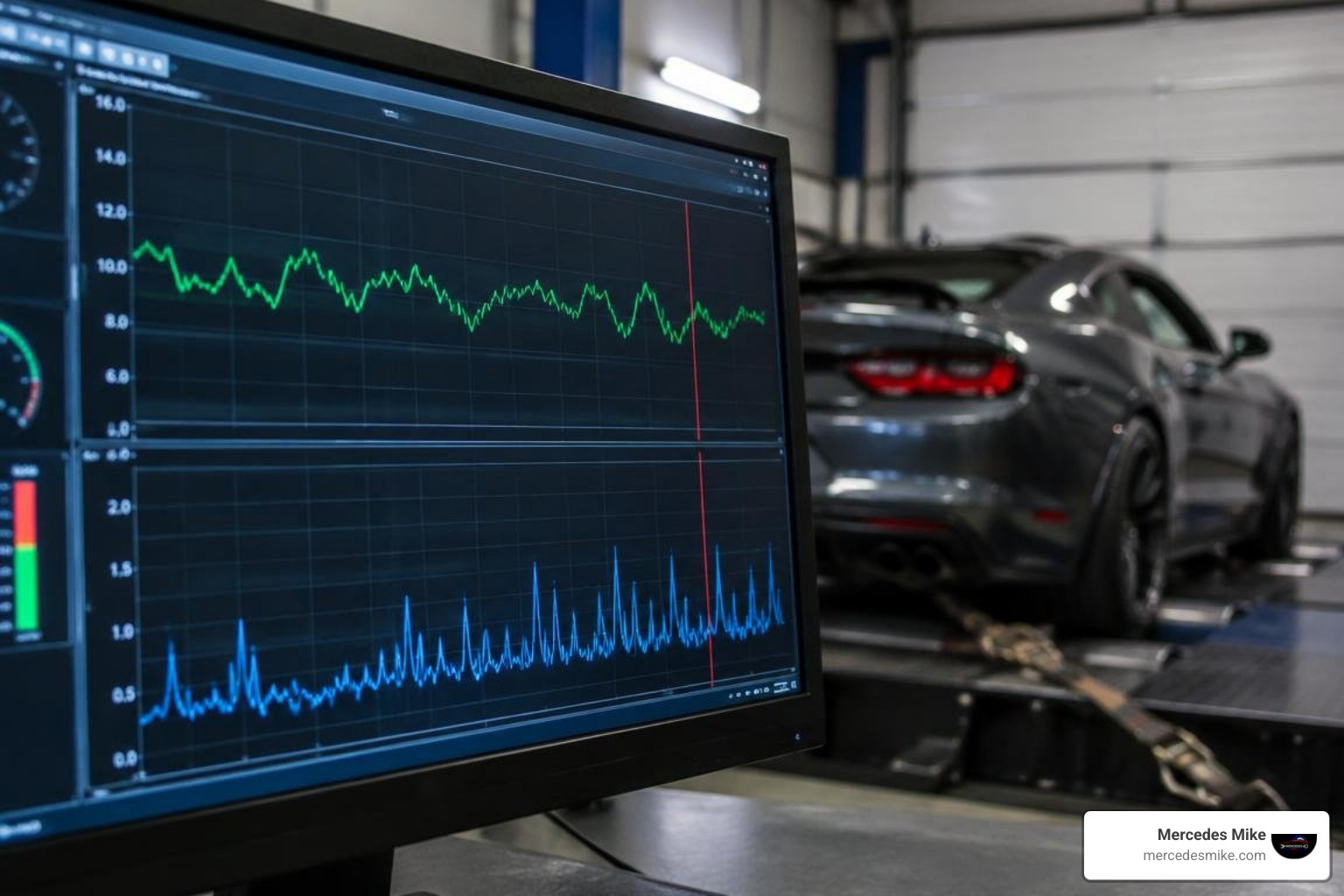
Pushing cylinder pressures too far or running overly lean air-fuel mixtures can trigger pre-ignition (engine knock), which can crack piston ring lands and bend connecting rods. Excessive boost without adequate cooling spikes exhaust gas temperatures, risking turbocharger turbine failure and warped exhaust manifolds.
To maintain everyday reliability, we advise following these safety rules:
Prioritize Pre-Tune Maintenance: Replace aging spark plugs, inspect ignition coils, clean intake valves, and verify fuel pump pressures before adding power.
Shorten Service Intervals: High-output engines run hotter and sheer oil faster. Reduce synthetic oil change intervals from 10,000 miles down to 5,000 miles.
Match Fuel Octane Accurately: Never run lower-octane pump fuel than what your calibration file requires.
Follow Dedicated Model Guides: Check specific vehicle requirements before tuning; for instance, older supercharged models benefit from reading a specialized E200 Kompressor tuning guide to understand pulley ratios and airflow limits.
Frequently Asked Questions About Engine Calibration
How long does an ECU flash take to complete?
The physical flashing process through an OBD-II port typically takes between 5 to 20 minutes, depending on the ECU processor speed and bus protocol. However, the complete calibration service—which includes pre-scan diagnostics, file extraction, map recalibration, checksum validation, flashing, and road testing—usually takes about 1 to 2 hours.
Will engine remapping void my vehicle manufacturer warranty?
Yes, recalibrating the factory ECU can impact your powertrain warranty. Modern dealership diagnostic tools detect altered software versions, non-standard checksum histories, and internal flash counters that record every write cycle—even if the vehicle is returned to stock before a dealer visit. If a powertrain component fails due to modified calibration parameters, the manufacturer may deny warranty coverage for that repair.
What is checksum correction and why is it necessary?
A checksum is a cryptographic mathematical calculation generated from the complete binary code of the ECU firmware. Every time software parameters are modified, the total hex value changes. The ECU checks this value during boot-up; if the calculated checksum does not match the stored reference signature, the processor recognizes the file as corrupted and refuses to start the engine, effectively "bricking" the module. High-end tuning software automatically recalculates and applies correct checksums before flashing to guarantee vehicle safety.
Conclusion
ECU tuning unlocks hidden performance, sharpens throttle response, and transforms the everyday driving character of your vehicle. Whether you want a responsive Stage 1 daily commuter or a high-output track build, successful tuning relies on matching proven software calibrations with a mechanically healthy powertrain.
At Mercedes Mike, our experienced technicians leverage diagnostic tools, bench flashing systems, and decades of German automotive expertise to keep your vehicle performing at its best. If you are located in Pompano Beach, Deerfield Beach, or the greater South Florida area, explore our expert auto repair and diagnostic services to schedule your performance health check today.